
Herein lies my blood, sweat, and tears.
The 2026 NFL Draft Big Board is finally upon us.
100 players — Watched. Evaluated. And Delivered.
As always, any questions, comments, or complaints are sent in the direction of @ThePhillyBlitz_
Enjoy.
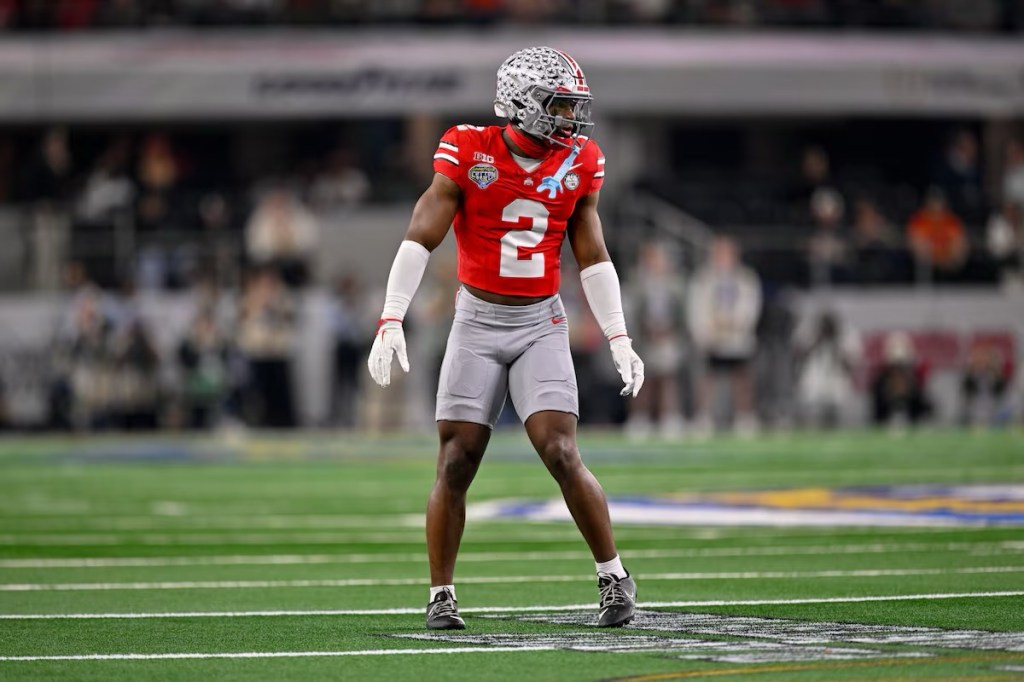
1. Caleb Downs, S, Ohio State
The first question that scouts ask when evaluating a prospect is, “are you born into football or is football born in you?”
For Caleb Downs, the answer is both. The son and brother of long-time NFL players, it’s no surprise that Downs is a student of the game. The first thing you notice about Downs is his elite IQ for the game. He always has a feel for what’s going on in his designated area, and along with that, enough feel for the game to know when to bail and when to stay.
This allows Downs to be deployed in a multitude of ways, with over 230 snaps per year, averaged as a pure safety, nickel, and in the box. The way he’s utilized is flat-out amazing. Downs has a rep where he’s the hole man in cover 2 (Texas 2024), then turns around and has a cover 2 rep where he’s outside corner playing the flat (Texas 2025).
While he has become a jack of all trades in the secondary, his use as a Big Nickel/Overhang safety allows him to showcase versatility. While he’s at his best in zone, his run support and coverage in man stand out. This is despite man coverage not being his greatest strength, specifically when receivers get to the stem of routes.
He works through traffic effortlessly. Downs routinely finds his way back to the target and makes a play before yards after catch opportunities arise for receivers. Physicality isn’t an issue with the three-year starter, as he is more than willing to show good form and wrap you up, but also throws the occasional boom stick. While Downs has shown minimal ball production, I believe that’s a product of him just being really good at his job. He’s rarely out of position and doesn’t take unnecessary chances.
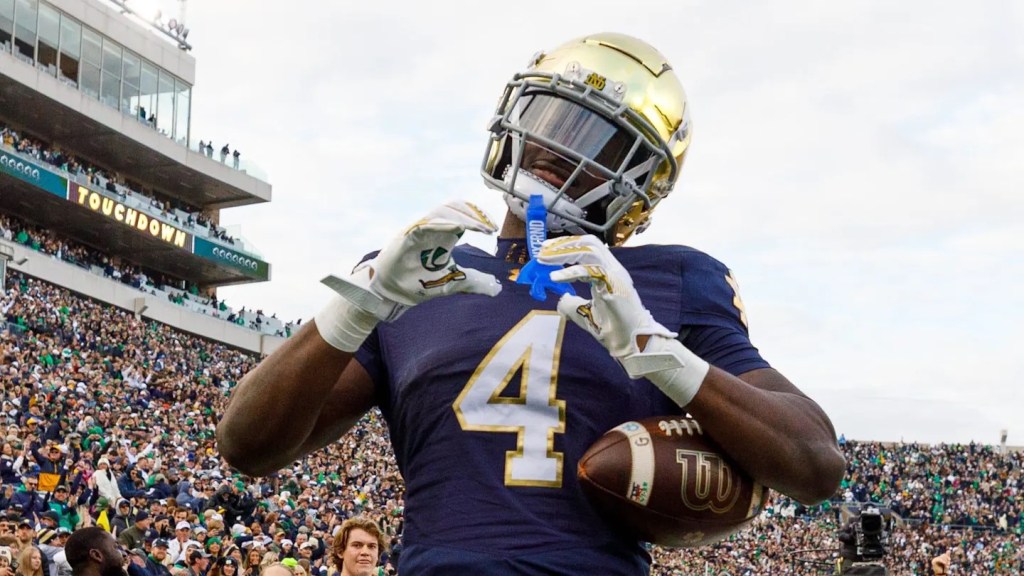
2. Jeremiyah Love, RB, Ohio State
Positional value and the running back position have a love/hate relationship. During draft season, those conversations become amplified during the early rounds. They leave you wondering, is the juice worth the squeeze?
However, when you have a guy who, instead of being compared to his peers, is compared to those who have come before him, the position begins to hold extra weight. This is the case for Jeremiyah Love. Scheme should not matter for Love, as he’s highly effective no matter the usage. He can win with gap or zone blocking — can win between the tackles or off tackle. Just give him the ball.
The first conversation had at the position is: Are you a 3 down player?
While the pass blocking is a work in progress, Love can be productive as a pass catcher. Most of his work is done from the backfield, but he has about 70 snaps where he’s aligned at WR (either in the slot or outside). The next question is: How do you win?
While offering some burner capabilities, Love is the type of guy that maybe doesn’t have a fifth gear, but he has a third and fourth and knows how/when to use them.
Love at heart is a one-cut back. He plays with natural vision. Love operates the position like a point guard watching the play unfold before attacking. He understands not just where the run is supposed to go, but how to help blockers maximize blocking schemes with how patient he is. He offers great contact balance. He is not the type of guy you tackle high. Defenders would be better off going low, but Love has a hurdle habit. It’s a blessing and a curse, but it makes sense given his history in the long jump. He is also quite agile, showing the ability to put together moves without losing momentum.
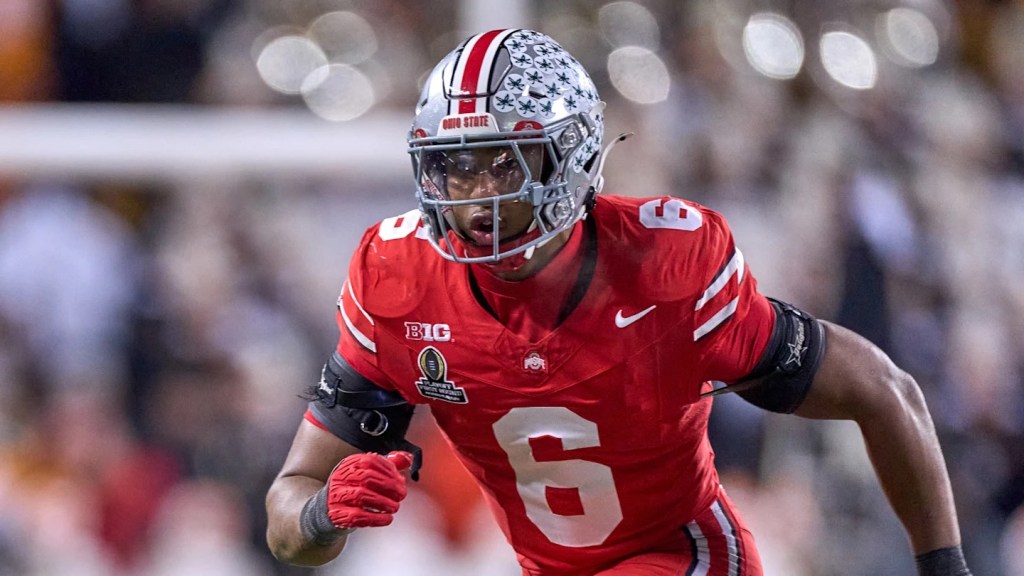
3. Sonny Styles, LB, Ohio State
The evaluation of Sonny Styles is why we as scouts do what we do. In this world, traits are king, but the idea of finding a prospect whose traits and skillset can actually coexist without it being a projection is rare. The scary part is that Styles was recruited as a 5-star safety prospect, spent his first two seasons at Ohio State, before transitioning to LB full-time as a junior. Meaning, despite how good Styles has been up to this point, he’s still only scratching the surface of what he truly can be at the position, only playing it for two seasons.
Finding a home for Styles was never easy, mostly due to his otherworldly functional athleticism. In high school, he was utilized at EDGE, linebacker, and safety, which makes sense why the transition has been seamless. This multiplicity has translated to the college level, where Styles has aligned everywhere from along the defensive line to as a deep hash Safety. He has shown the ability to be productive in multiple roles as an off-ball linebacker and was utilized as much more of a blitzer in 2024. Styles produced six sacks that season and has shown a willingness to run through any and everyone’s face, from Guards to fullbacks, your anchor better be firm.
When used much more as a cover backer in 2025, Styles showcased his range. This is not your ordinary backer in space. Styles can flip his hips, and does not panic when the ball is in the air. Styles’ best attributes may be his run defense. He comes down hill like a man possessed but manages to maintain gap integrity. His ability to read and react is high-level, and the scary part is that it can get better. Styles makes blockers who are trying to climb to the second level earn their keep. He knows he will win a race to the spot, which allows him to quickly deconstruct or avoid blocks altogether
He has proven to be a firm tackler after missing 19 tackles in 2024. Styles didn’t miss a single tackle during the regular season, with his only two coming from the Bowl game. He offers elite closing speed when in pursuit and makes effortless tackles in space.
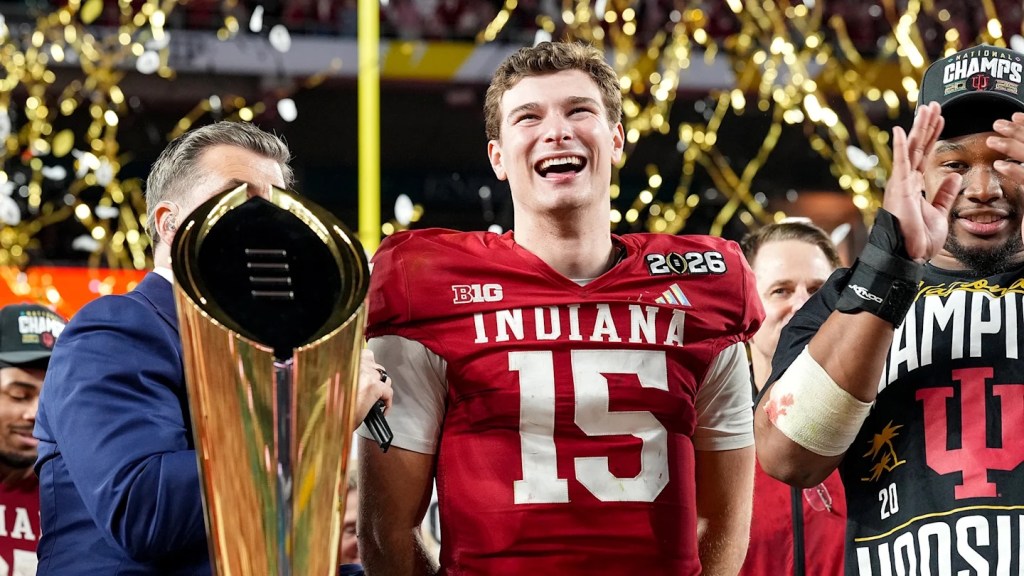
4. Fernando Mendoza, QB, Indiana
You have to be excited about the prospects of what Fernando Mendoza is and can be at the next level. At 6-foot-5, 236 pounds, Mendoza offers the prototypical measurables at the position that should have all scouts salivating. However, after operating exclusively from the shotgun in college, you have to be intrigued to see whether he can handle the transition to being primarily undercenter at the next level.
Mendoza benefited at Indiana from a unique offensive approach featuring many RPOs. Because of this, Mendoza was rarely required to get through progressions. Despite these limitations this past season, Mendoza has shown an ability to attack all three levels of the field at some point or another during his college career. He excels at the deep ball. When he has a clean pocket, it’s as pretty as they come. Mendoza possesses a seamless NFL-caliber arm. The ball just snaps out of his hands. He has a rep vs Florida State in 2024 where he’s out on the move and just rips an absolute rocket behind the ear of the defender into a tight window.
With 40 touchdowns to just 5 interceptions in his career against the blitz, Mendoza has been notoriously good when the pressure heats up. His best trait is his location, specifically on back shoulder throws. He puts the ball in a spot where only the intended target can make a play. People fall in love with the arm, maybe the mobility, but the young man wins with his brain more often than not. He processes things extremely well. The kid has some juice. I wouldn’t call him sneaky athletic by any metric. Also, Mendoza has the toughness to take on a hit if needed, though you don’t want to see him doing this often at the next level.
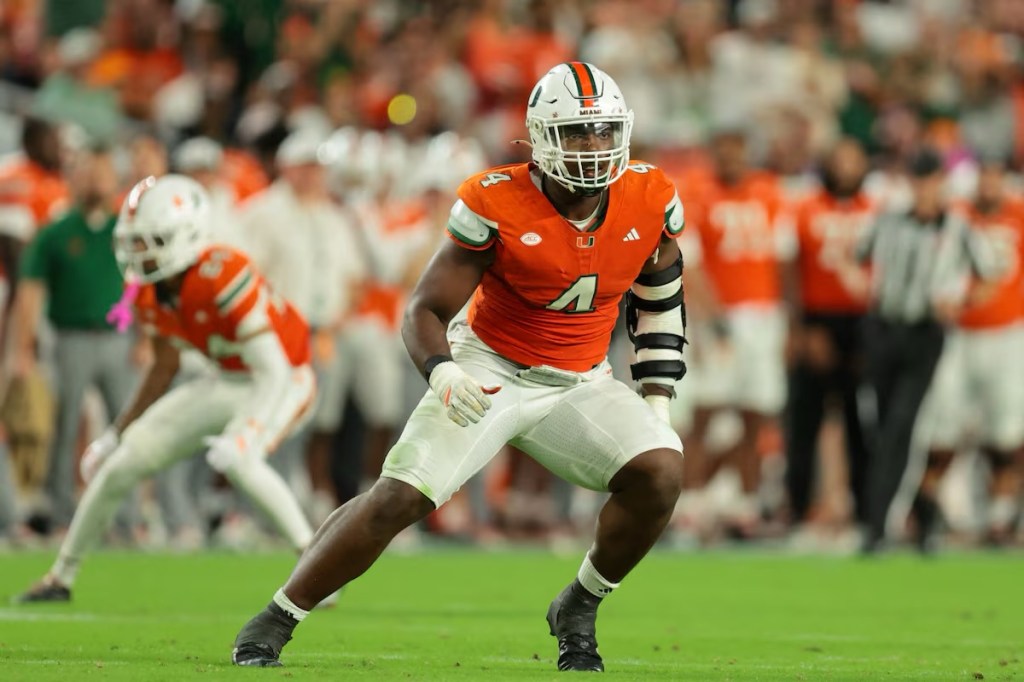
5. Rueben Bain Jr, EDGE, Miami
From an on-field perspective, there aren’t many players in this draft class better than Rueben Bain Jr. The epitome of tape over traits, Bain is a highly productive and accomplished player dating back to his time at Miami Central High. The national audience was introduced to just how good Bain is during Miami’s College Football Playoff run. However, during draft season, there are multiple factors that come into play as to why a prospect will or will not be successful. For Bain, the big conversation is centered around length or the lack thereof.
Bain is a uniquely built young man. He’s wider than he is long. He offers short arm length at 30 7/8 inches, but quality wingspan at 77.5 inches. However, despite the limited frame, Bain has proven that he wins with leverage, not traits. This allows him to continuously displace blockers by stacking and shedding. Bain is a noticeably elite run defender who uses his hands like weapons both at the point of attack and during the hand-fighting process.
In terms of Bain the pass rusher, he displays some short-area quickness when getting off the ball, but doesn’t show that same quickness when closing in on the QB. Although this leads to plenty of pressure, he still impacts the play, but he might miss out on sack opportunities at the next level. I’d like him to add to his pass rush plan from a finesse standpoint and offer solid bend, but it’s nothing to write home about at the moment. Bain offers some versatility, being deployed from both an inside-outside alignment.
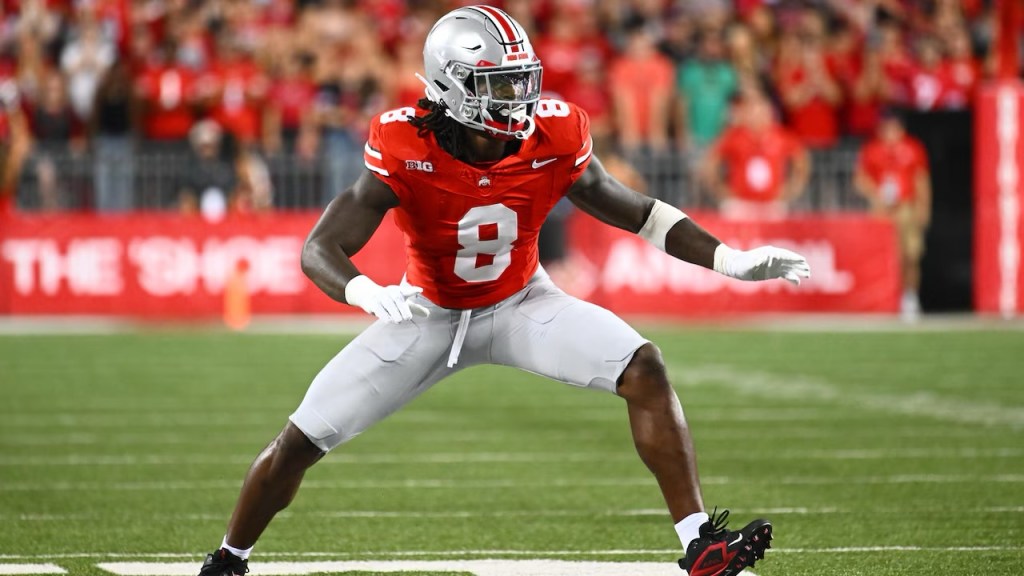
6. Arvell Reese, LB, Ohio State
Arvell Reese is the type of unicorn that keeps the offensive coordinator at night. Doing his best impression of ‘Where’s Waldo’, Reese is currently a tweener. The landing spot will be important. I’d prefer him to land in an odd front to ease the continued relationship between Reese, the off-ball linebacker, and Reese the pass rusher. He shows occasional flashes in coverage, but also could protect the middle of the field a little better; he also has to learn to trust his eyes more.
As a pass rusher, Reese lacks the ideal size to truly commit to being a full-time pass rusher. He offers the pure skill to be successful in this area, but needs to add the knowledge. Reese has to understand why he’s putting together specific moves instead of just doing what he thinks will work. With only a year and a half of playing time and just one season of high-level production, Reese is still a work in progress, but he offers a high floor to match an even higher ceiling.
That being said, his versatility is his best asset, often being deployed as a spy, stalking his prey, waiting for the right time to pounce; essentially eliminating mobile QBs. He is also a really good run defender, both off-ball and along the edge. Reese has proven the ability to set the edge despite an unnatural frame for the position. He possesses great arm length and understands exactly how to use it to his advantage. Reese is also an excellent tackler in space, bringing ball carriers down with authority.
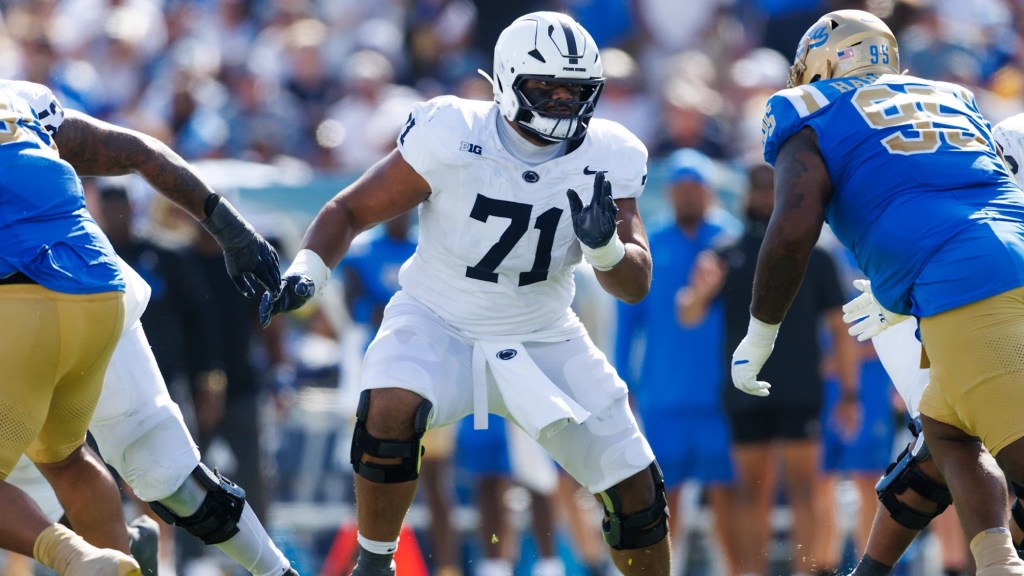
7. Olaivavega Ioane, iOL, Penn State
Football was always in the range of outcomes for Olaivevega Ioane as he watched his brothers play growing up. However, with his parents having strict rules regarding academics, it wasn’t until Ioane was in high school that he was able to play the game from a seriously competitive standpoint. Finding the game at a later age, however, hasn’t impacted the trajectory of his development. In fact, one might say Ioane is ahead of schedule in some metric.
Ioane doesn’t offer very much positional versatility. About 1,880 snaps at left guard alone, and just under 2,200 snaps at guard overall. Outside of that, Ioane has logged just 15 career snaps at tackle and 17 at center. Run blocking is a work in progress; while he has shown flashes, he is more quick than fast. He can be impressive when he’s out on the move in short spurts, but lacks the lateral mobility and range to win at the second level and beyond consistently.
That said, where he makes his money is in pass protection. Ioane has not allowed a sack in over two seasons and has only allowed one quarterback hit during that same timeframe. At 6-foot-4, 320 pounds, he possesses a strong anchor. Ioane was actually bigger as a sophomore, but dropped about 20 pounds heading into this season. He has claws for hands, once he gains leverage. You can appreciate the pad level he plays with at his size, and he takes the expression low man wins to heart.
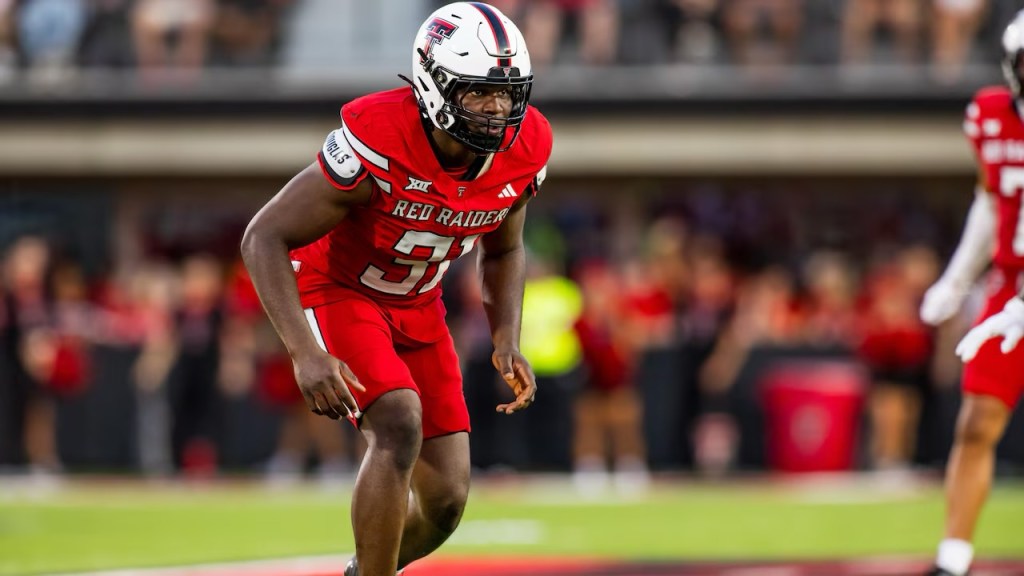
8. David Bailey, EDGE, Texas Tech
David Bailey’s development up to this point has been a continued upward trajectory beginning at Stanford. Here he spent his first three seasons, but it was his sophomore and junior campaigns where you saw things slowly start to come together for Bailey. Despite being deployed in a rotational role, he was able to produce 12 sacks and 43 quarterback hurries over the two seasons. However, it was the transfer to Texas Tech where Bailey was afforded more opportunities to rush the passer, where he seemingly figured it all out.
In terms of just rushing the passer, David Bailey may be in a class of his own in this year’s NFL Draft. He possesses elite first-step explosiveness, firing off the ball, covering so much ground, making tackles work that much harder to beat, or meeting him at the spots. Bailey displays average bend at best. He is fairly stiff at the top of his rush arch, but he is just small enough to win reps around the edge.
I’d like to see him develop a secondary pass rush plan. He has a wide array of ways to beat you initially, but when it doesn’t work, he becomes much less effective. Wins primarily with power, but has proven to love a good spin move attempt. Bailey has some interesting reps to say the least (see vs. Arizona State 2025) when he runs into a tackle that can match him from both a speed and power standpoint.
Bailey does not offer the same production in run support as he does as a pass rusher. He’s much better when he can use his speed to win rather than read and react. He can get pushed around on down blocks and double teams, making him a non-factor in stopping the run.
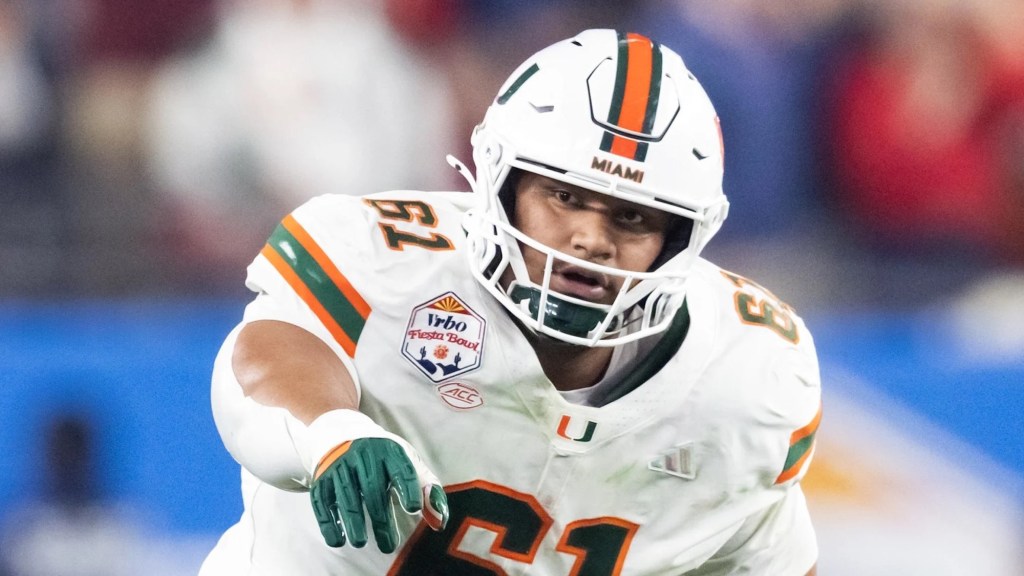
9. Francis Mauigoa, OT, Miami
Football is a family game for the Mauigoas. Setting the stage was older brother Fredrick, who was a multi-year starter at Washington State and spent time with multiple teams at the NFL level. Soon to follow was Francisco, who is currently a linebacker for the New York Jets. Then there’s arguably the most talented of the bunch in Francis, who was widely known for his work as a tackle from his time at IMG Academy.
However, committing to Miami, more specifically under the tutelage of Mario Cristobal, who has a history of developing top-tier talent at the position, helped take Mauigoa to the next level. Cristobal was a standout offensive lineman for the championship Miami teams during the late 80s/early 90s. He builds his offensive lines much like he played, a mauling, in-your-face rushing attack, fitting Mauigoa to a tee.
Mauigoa is a total mauler at the position. He doesn’t just gain a little ground as a blocker; he wants to send you into the bleachers. He has some nastiness to him. In pass pro, Mauigoa has an anchor that refuses to allow him to get beaten by speed to power rushers. He’s very meticulous with how and when he uses his hands. He’s built like he belongs in a phone booth, but can surprise you a bit on the move. That said, it isn’t something I’d ask him to do on a day-to-day basis. Mauigoa’s foot speed is average at best, setting him behind the eight ball against speed rushers.
Highly experienced for his age, Mauigoa has been primarily a right tackle with over 2,800 snaps at the position. The only other position he has played is guard, which was for just 10 snaps over a two-game stretch in 2025. Speaking of guard, he offers average length for the position. Not to the point where a move to the interior is a necessity, but it could possibly be something to consider. Mauigoa deserves the opportunity to fail first.
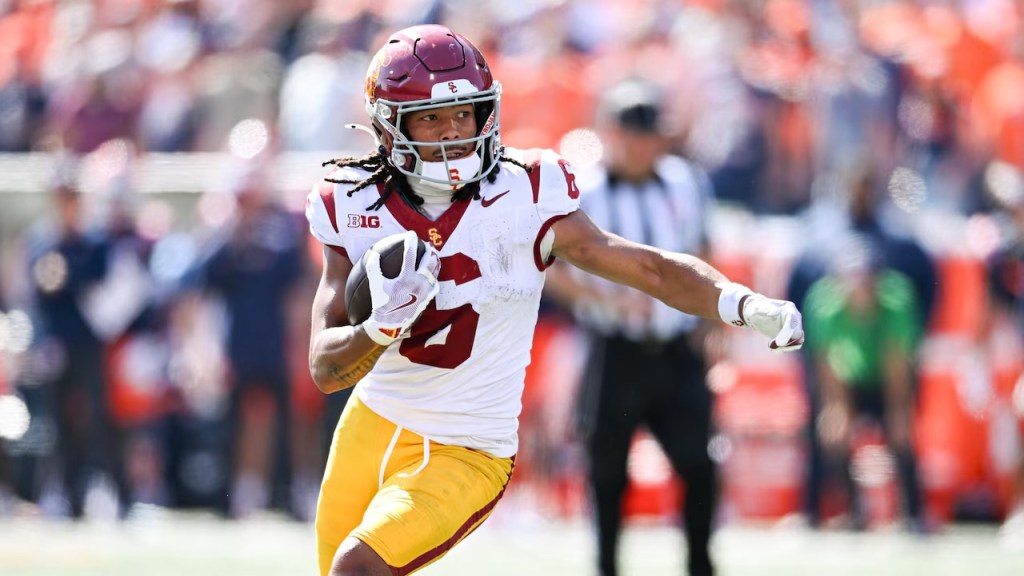
10. Makai Lemon, WR, USC
It’s not the size of the dog in the fight, it’s the size of the fight in the dog. Despite not possessing the same stature and length as his peers at the top of the class at his position, Lemon plays a whole hell of a lot bigger than what his measurables predicted. He excels from a contested catch standpoint, where he hauled in 71% of these opportunities as a junior. Lemon’s body control is unreal, making an overly conservative effort to make sure he’s always in position to play the ball. Lemon isn’t afraid to take a hit or two if it means he makes a play.
As a two-year starter, Lemon has typically aligned from the slot, which has led many draft analysts to pigeonhole him into this same utilization at the next level. However, between the uptick in his usage along the boundary this past season and what his skillset is made of, I believe he can excel from a boundary role in an offense willing to use him as a movable piece. Nuance is the name of the game with this young man. He does all of the little things that make him successful. Lemon can win at all three levels, both from an ability to get open and as a pass catcher.
Lemon showcases a deep route tree, while you’d like to see him be more refined in some areas, he has proven to be more of a separator than a pure route runner. I appreciate his understanding of leverage and how he manipulates blind spots. Lemon battles through contact at the stem of routes, despite his frame, which will not be denied or deterred from his process. He’s more than willing to hand-fight; his battles vs Leonard Moore (Notre Dame 2025) should be remembered in war history.
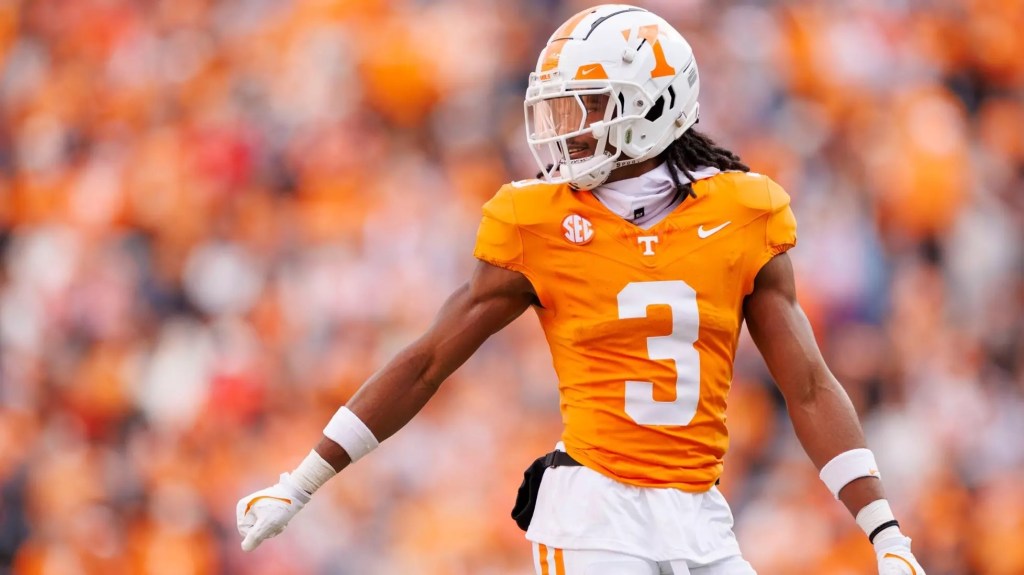
11. Jermod McCoy, CB, Tennessee
From a talent standpoint, there aren’t many players in this class that have made the case that Jermod McCoy has. As an initial commit to Oregon State, despite only starting half the season, McCoy spent his freshman year showing flashes of what was to come. However, it was his single season at Tennessee that brought everything to fruition. In terms of his 2024 tape, McCoy stands head and shoulders above each of his peers. The problem is that following an ACL tear in January of 2025, McCoy didn’t play another down of college football, despite being able to practice early in the season.
The question now is, will McCoy be able to return to the same form in which we last saw him? A form that consists of a prospect who is known for his ability as a man corner, but leaves quite the impression in zone coverage. I would like to see him maintain eye discipline and not rely on his athletic abilities so much. He has a good understanding of route concepts and when to break off from one to the next. McCoy is a highly instinctual player, though that instinct can quickly turn into aggression, with him understanding the type of athlete he is. He tries to bait QBs into believing something is there that isn’t.
This works until he actually believes he’s beaten, which leads to him being a bit handsy. This isn’t a problem until it is, because he uses his hands so well. From a coverage standpoint, he has a mirror and matching ability that is unmatched by his peers. McCoy makes receivers work for any inch of separation and knows how to use the sidelines as his friend. The click and close ability is there. He puts his foot on the ground and gets down to business. McCoy embraces a challenge. He truly believes the guy lined up against him is always inferior, no matter the match. He’s willing to move around, including into the slot if that means guarding the best dude.
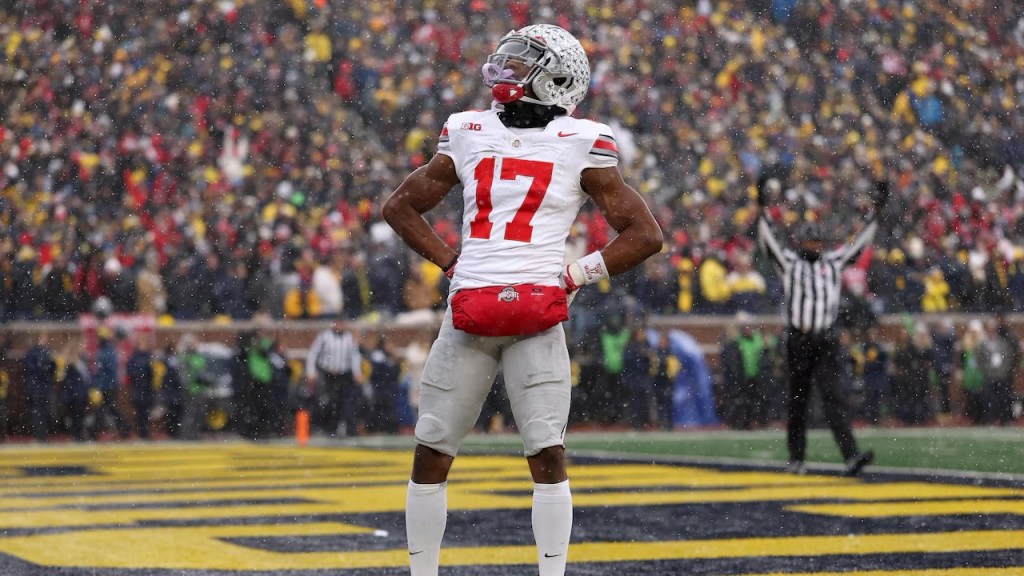
12. Carnell Tate, WR, Ohio State
The shadow cast by the wide receiver empire known as Zone6 looms near in the background of the evaluation of Carnell Tate. With the opportunity to become the sixth Ohio State receiver selected in the first round over the last five years, the shoes Tate has had to fill loom larger because, in some eyes, he played Robin to the potential number one wide receiver in the 2027 class this past season. As the third receiver to commit as a Buckeye of his class, Tate is used to letting his play do the talking as he flies under the radar, similar to his time at Marist High before transferring to the Florida powerhouse, IMG.
Playing alongside Jeremiah Smith has its perks, such as the amount of single coverage Tate was able to take advantage of this past season that he wouldn’t have seen anywhere else. However, at 6-foot-2 with a 78 inch wingspan, Tate possesses the size of an X receiver. He uses his length really well, showcasing great body control and a catch radius that makes passers right even when they’re wrong. His forty times matches what you see on tape. He isn’t a burner by any stretch of the imagination, but has a long stride that builds up over time.
I appreciate his ability as a route runner. His lanky frame prevents him from looking as pretty as some of his peers. This frame is on display on routes that require more twitch, but Tate knows how to control the tempo and use body fakes to create windows for himself. He has a really good feel for zone coverage and where the open areas are. Tate often works to make himself available for the quarterback in some metric. He possesses aggressive hands, meets the football not just from a contested catch standpoint, where Tate has pulled in 73% of his attempts in this area over the past two seasons. These same traits to meet the football are on display when unchallenged.
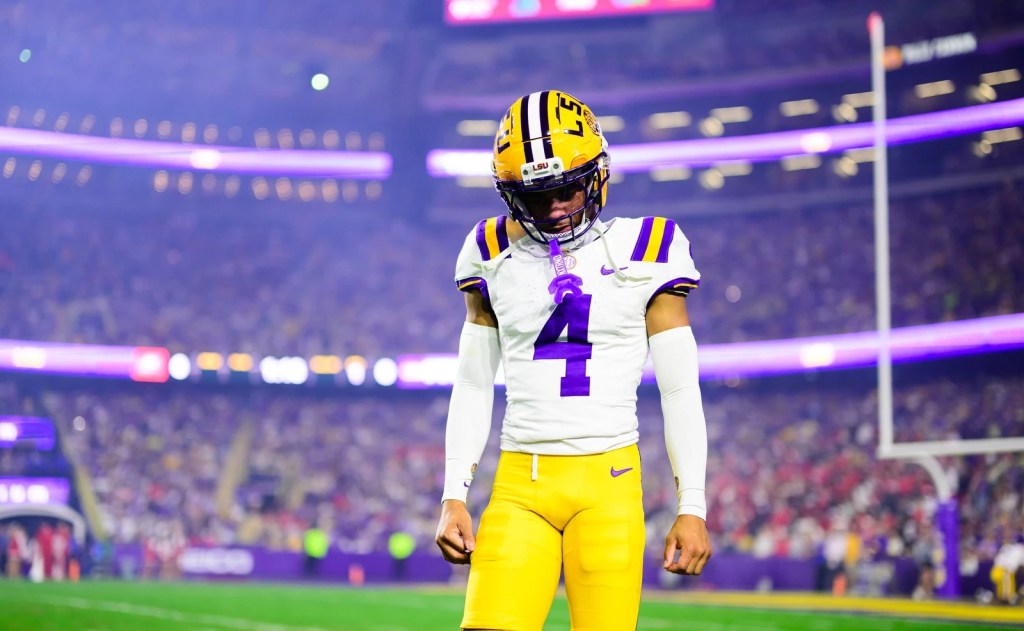
13. Mansoor Delane, CB, LSU
A former three-star recruit who spent the first three seasons of his college career at VA Tech, after playing in spurts as a freshman, Delane burst onto the scene during his sophomore campaign. A season that showcased the versatility he showcased in high school, where he served predominantly as a nickel and safety. During this time, Delane, while mostly serving along the boundary, played 160 of his snaps aligned from the box or nickel. While Delane’s play took a step back as a junior, the transfer to LSU as a senior showcased an entirely different player with an entirely different skillset.
Delane is pretty well-rounded after spending three years in Tech’s zone-dominant scheme. He was able to display massive production from LSU’s man-heavy scheme, where quarterbacks essentially stopped throwing the ball his way. For context, as a freshman, he was targeted 35 times on 241 coverage snaps. As a senior, he took 100+ more coverage snaps and was still targeted just 35 times. This is a stark improvement from the 113 targets over the previous two seasons.
In man, his mirror and match abilities are really good. Delane is as patient as they come. He will stay in phase until the receiver shows his hands (see Clemson 2025). While in zone, Delane sees the game really well. He’s always in the right place because he’s willing to take chances when he’s free of assignments. Despite lacking the necessary length at the position, Delane plays bigger than what the numbers display. Attempts to mask these flaws behind physicality, though, would like to see him add more mass.
Delane leaves much to be desired in run support, offering more want-to than know-how. You can expect a shutdown cornerback capable of producing from any scheme or alignment if willing.
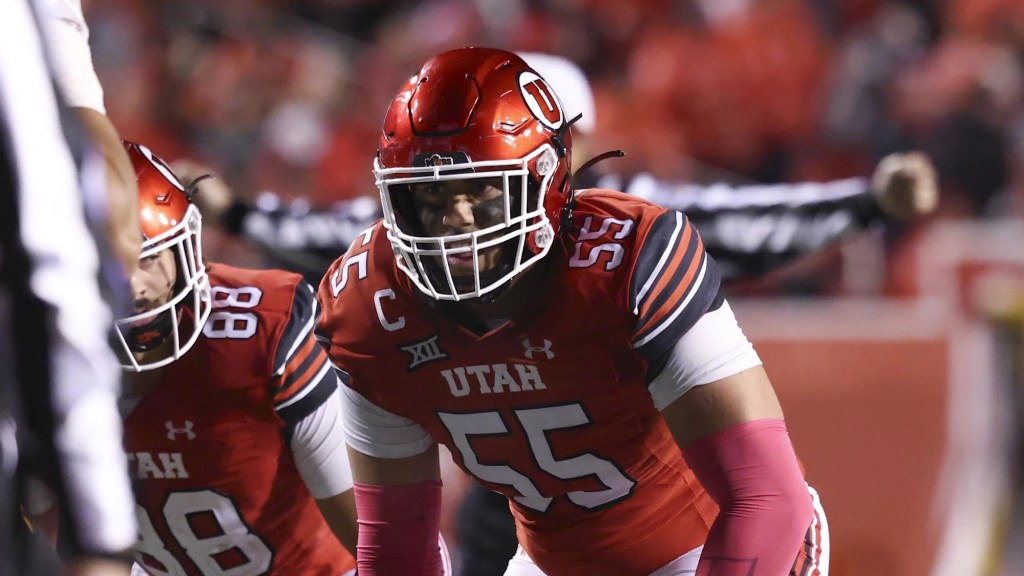
14. Spencer Fano, OT, Utah
Spencer Fano looks to continue the longstanding relationship between his family and the NFL. With four uncles who have spent time across the league, an older brother who is also in this year’s draft, and a younger brother who we could be talking about in a few seasons. It’s no surprise Fano began playing football at such a young age. The sport has been a constant for him, while he has returned the favor to the game, playing in 37 consecutive games, garnering over 2150 snaps during that time.
However, just because you love something doesn’t always mean it will love you back. For Fano, as skilled a prospect as he is, failing to meet the required 33-inch arm length historically needed to succeed at the position is a red flag. This brings into question which position Fano would be better suited for at the next level. Despite failing to record a single snap from the interior in his college career, Fano’s skill set translates very well to the inside.
Fano moves extremely well at the position. He dominates off the ball, attempting to seal an edge or getting to his spot on a reach block. Fano uses his hands well, though he would just like to see him get a better location. Way too often, his hands are outside the numbers, which makes it look bad. I wouldn’t necessarily call his anchor stout, but he does a quality job surviving the initial wave. Showcases an ability to reaffirm his base.
Fano excels as a run blocker and wants to be physical despite his smaller frame. Has to be dialed back occasionally, but it’s all in the spirit of competition. He’s technically sound, but needs to get stronger. He does a good job of getting to his spots but has to be able to sustain blocks consistently.
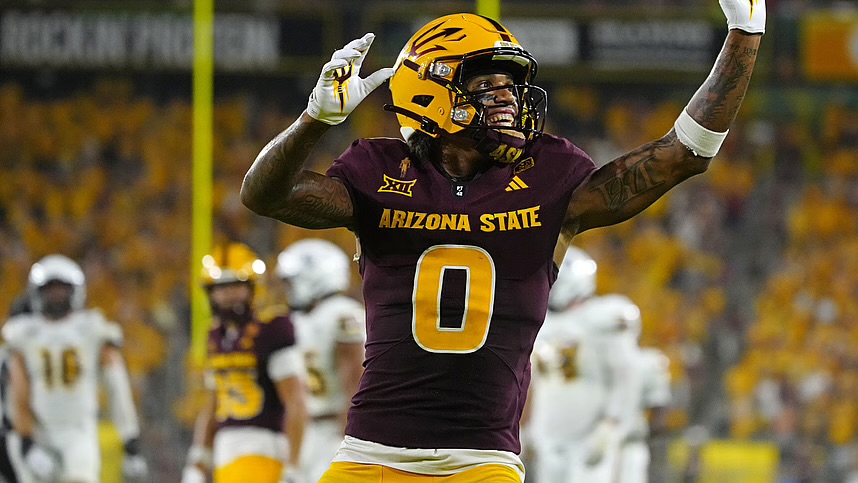
15. Jordyn Tyson, WR, Arizona State
The evaluation of Jordyn Tyson is a real Jekyll and Hyde conversation. Talent is not an issue here, as Tyson has all of the abilities in the world. The problem is that availability is the best ability. Tyson has a detailed history of injuries that have kept him off the field for significant stretches of time.
A significant knee injury cost him the rest of his freshman season and almost the entirety of his sophomore campaign. A collarbone injury finished his junior year early. While a hamstring injury suffered against Texas Tech this past season has lingered into his draft process.
However, when allowed the opportunity to showcase his talent, Tyson leaves no stone unturned. Tyson offers inside, outside versatility. Though he has predominantly been aligned on the outside. Tyson showed in 2024 that he is capable of handling the volume with 161 snaps there.
From a catching standpoint, Tyson is much more aggressive as a pass catcher when he feels threatened, typically allowing the ball to come to him when no defenders are near. Tyson showcases great body control. He has a career contested catch percentage of just 52.5%, but has put some really good reps on tape that display an ability to track and go get the football.
Where Tyson makes his money as a pass catcher is how he blends the lines of route runner and separation. I appreciate his understanding of leverage and how he uses that against defenders. Tyson offers little to no wasted movement; even his extra steps have a purpose. It makes you respect him vertically with how he sells it, which opens up a variety of possibilities. Loves to go to his rocker step at the stem of routes to create a crease.
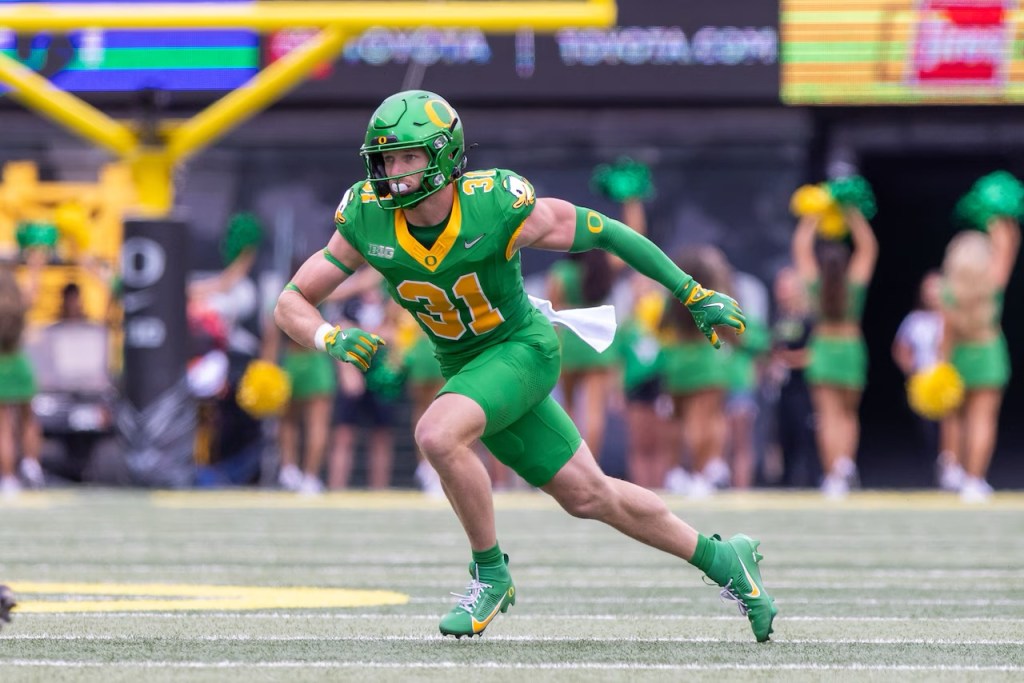
16. Dillion Thieneman, S, Oregon
Versatility and adaptability are titles held synonymous with Thienenman. What immediately stands out is his range and field awareness when deployed from the deep hash. He patrols the field almost like a center fielder with how much ground he can cover. Thieneman primarily filled this role as a freshman at Purdue, where he amassed 700+ snaps at this alignment, producing a career high six interceptions. However, as a sophomore in West Lafayette and in his one season at Oregon, Thieneman saw his role expand, which was both a good and bad thing.
During his second season at Purdue, he was asked to do a lot of similar things as his time at Oregon from a multiplicity standpoint.
Thieneman, however, took some time for everything to click. This could be attributed to growing pains or just the lack of talent around him. On the other hand, his time in Eugene painted the picture of a prospect not quite finished, but with the groundwork in place to become Picasso. With over 600 reps aligned as a box safety and 200+ as a nickel each over the last two seasons. Thieneman has become a bit of a swish army knife.
Thieneman sees the game very well, understanding what is happening from the quarterback’s thought process to how things are developing in front of and around him. You’ll enjoy what you see from him in run support. A lot of how he sees the game from a passing standpoint has translated to the run. While Thieneman does a great job of putting himself within the action in run support but often bites off a bit more than he can chew.
He has a heart bigger than the fight in front of him when confronting blockers, which leads to him getting swallowed up by bigger blockers. He can also occasionally overshoot gaps, taking himself out of the play, and being too aggressive. Ideally, Thieneman is best suited for a traditional safety role, allowing him to showcase his sideline-to-sideline ability, but he can offer versatility to whichever team selects him.
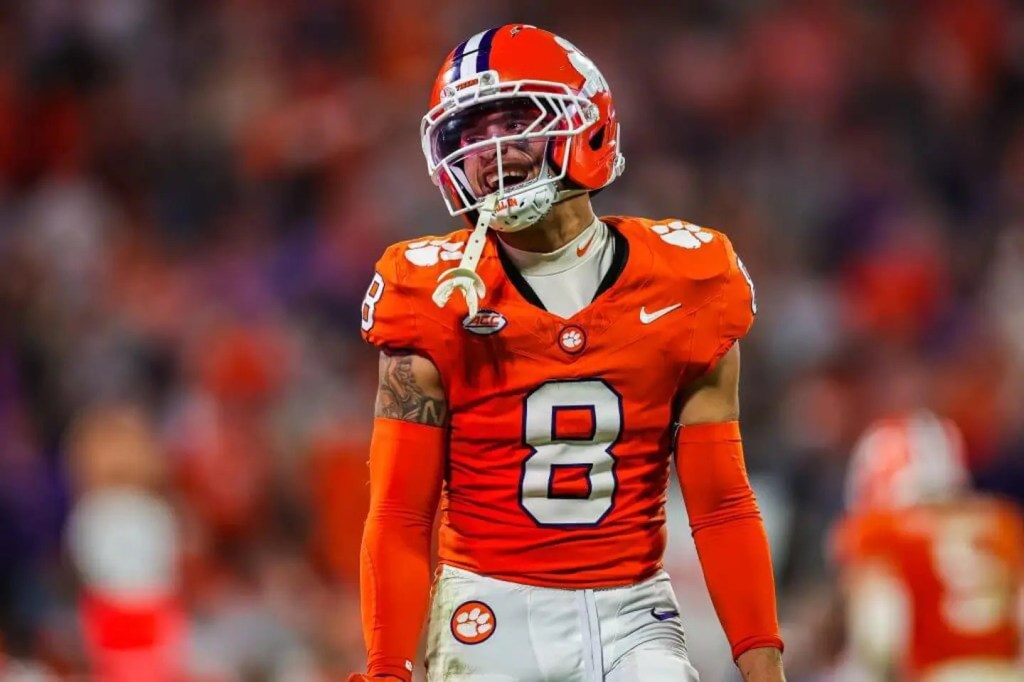
17. Avieon Terrell, CB, Clemson
The younger brother of Falcons cornerback A.J. Terrell, Aveion’s aspirations to follow in his brother’s footsteps are clear as day. Same position, same number, same university. Coming from NFL bloodlines that support an All-Pro player, the younger Terrell has essentially shadowed. It’s no surprise the latter is as prepared as they come for this moment.
Terrell is as technically sound as they come in this class. He excels in off coverage. I appreciate how he puts his foot in the ground and loses little to no movement as he breaks on the ball or receiver. Terrell opts for more of a mirror and match technique rather than hand fighting in press coverage. He shows an ability to stay in phase while sticking to the receiver’s hips upon transition and at the stem. Terrell isn’t the most physical player, but he doesn’t shy away from the contact either, even against bigger pass catchers. Is willing to play through the football to force incompletions.
Despite having the heart of a lion, when matched up with bigger receivers, “his arms just aren’t long enough to box with God”. Which is where the issue lies; at 5-foot-11, 186 pounds, there are questions as to whether he can compete consistently along the boundary. However, the boundary is the only place Terrell knows as home, with over 1,200 snaps on the outside over the last two seasons.
There are some questions about his long speed following the combine, but between injuries impacting his process and his background in track & field (In the 100-meter dash, posted times of 11.11, 11.31, 11.33, and 11.34 in Spring 2022, 10.97 Spring 2023), there should be minimal concern here.
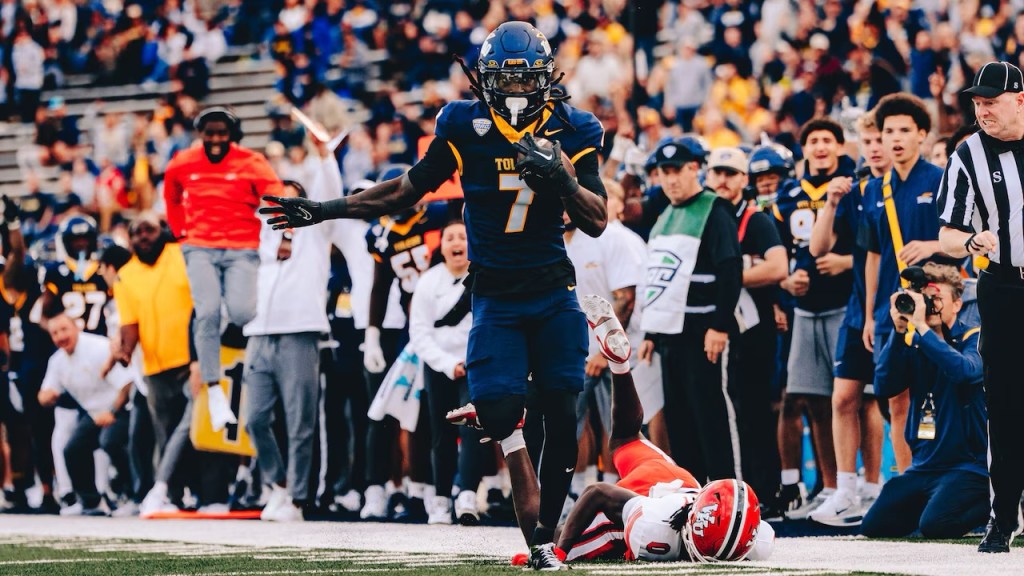
18. Emmanuel McNeil-Warren, S, Toledo
The safety position is in the middle of a renaissance, and prospects like Emmanuel McNeil-Warren are the reason why. The resurgence of the position has heavily relied on the versatility these players provide, becoming unicorns behind the growth of the ‘Big Nickel’. A lot of that is due in part to the unusual size these players possess in order to match the skillset of these players. It’s hard not to say McNeil Warren doesn’t fit the bill, coming in the 97th percentile in terms of height for players at his position historically.
At 6-foot-3, it’s easy for McNeil-Warren to remind you of the Hamiltons, James, and Emmanwori’s that came before him. However, McNeil-Warren lacks the weight profile at 201 pounds that these players possess. Which brings up questions about how his body can withstand the play style for a full 17-game season. Physicality is the name of the game when it comes to McNeil-Warren, who patrols the MOF like he owns it! Receivers better be prepared to take a hit. In run support, he gets downhill in a hurry, always looking for an issue. EMW has enough wiggle to evade blockers but isn’t afraid to get dirty if needed.
From a coverage standpoint, EMW is at his best when he’s in a split field look, keeping everything in front of him, whether it be in quarters or as a robber. He can get caught chasing the ‘Big’ play at times. If only he could just learn patience in the position, not necessarily letting the game come to him because he’s at his best when he’s creating, but understanding exactly what offenses want to do. A turnover machine, EMW has perfected the art of sound tackling while continuing to work for the football. With 9 career forced fumbles and 5 interceptions, he has proven the ability to be a ball magnet. There is some scheme specificity that will unlock exactly how good EMW can and will be. However, history has proven he has a home in this league.
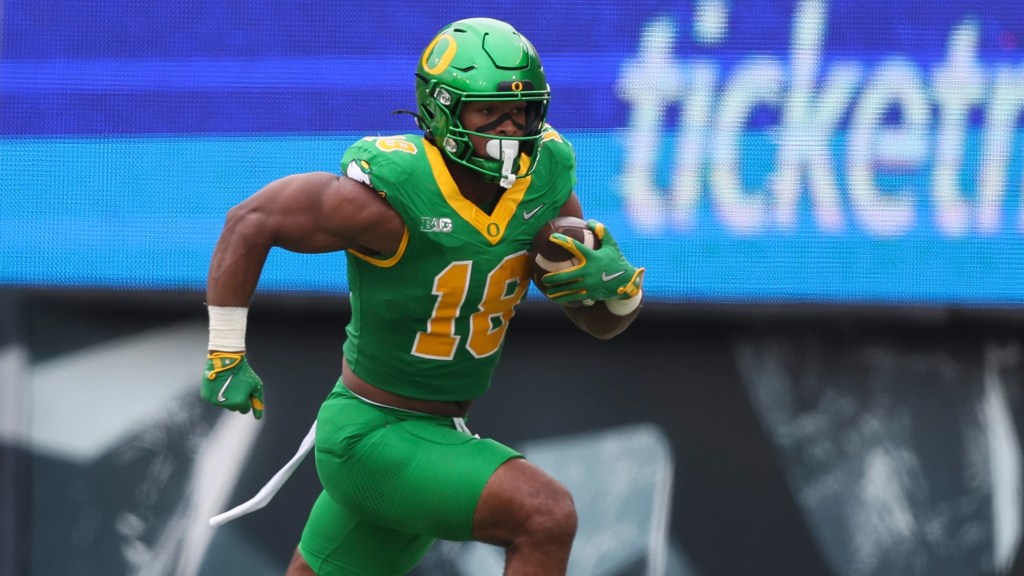
19. Kenyon Sadiq, TE, Oregon
Kenyon Sadiq is so alluring as a prospect because it’s hard not to fall in love with the measurables and traits this young man possesses. At 6-foot-3, 241 pounds, while a bit undersized for the position, Sadiq is a high-level functioning athlete. He can win vertically against smaller defenders with size, but bigger defenders will have issues matching up with him from a movement and route-running standpoint. He covers so much ground with a legit 4.3 speed at the position.
Sadiq offers alignment versatility. He can be a matchup nightmare from the slot. He can also be productive in-line, but has just 104 total snaps from inline alignment over the last two seasons, mostly due to the lack of size to consistently hold up against linebackers and EDGEs. Despite this, he is a willing blocker. Sadiq is currently more ‘want to’ than know how at this point, but he has been used as a lead blocker on split zones. Sadiq does a great job getting a hand on defenders, but must get stronger in order to maintain a block consistently.
He is currently more of a projection than anything. Terrell’s production profile is minimal, with only one true season of production. What you see on tape hasn’t completely translated to the stat sheet just yet. His 51 receptions were a program record at the position. His hands need to be more consistent. He had at least 1 drop in each of his first two seasons; however had 6 drops in his lone season of mass production. Sadiq will be at his best for an offense willing to use him all over the field. Has shown the ability to become the focal point of a passing attack without consistent volume; some of his issues will be with continued development and body maturation.
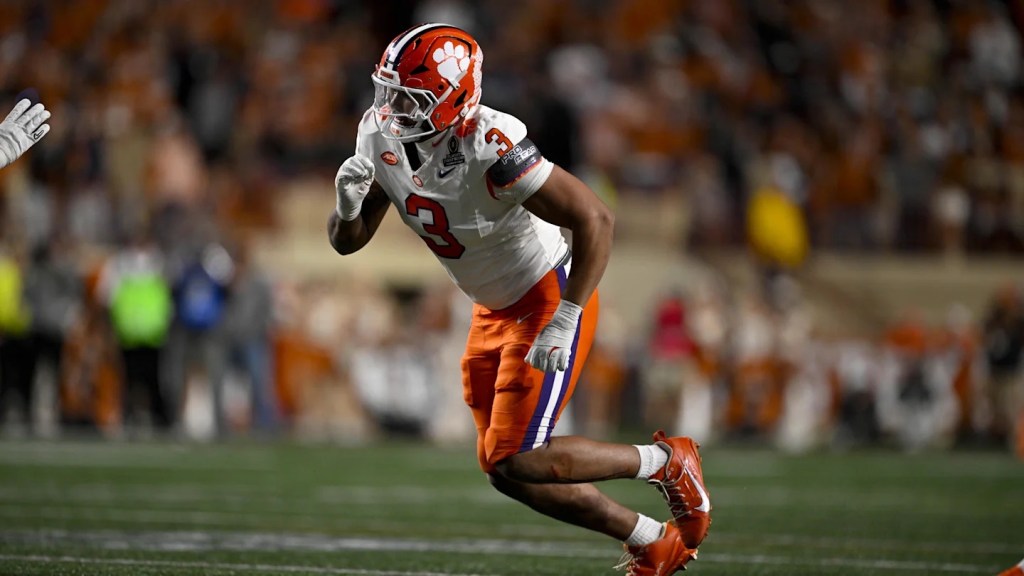
20. TJ Parker, EDGE, Clemson
In player evaluation, you quickly learn that development is not a linear trait. Just 365 days ago, TJ Parker was viewed as a sure-fire top 10 pick following a sophomore campaign that saw him produce 12 sacks, 20 tackles for loss, 6 forced fumbles (Program single season record), and set the nation on notice. This past season, however, saw him take a noticeable step back, with just 6 sacks, 10 tackles for loss, and no forced fumbles. This inconsistency has left many to wonder which one is the real TJ Parker?
Despite his monster 2024 season, Parker has never possessed a premier pass-rushing profile. However, what that season showcased was a ceiling that many were unsure Parker would ever reach. Now, the goal becomes figuring out how to maximize this season, something the Clemson defensive staff struggled to do this past season. How Parker wins as a pass rusher is strictly through power. While he isn’t the most explosive player, he has a natural strength to his game. Parker offers little bend at the position; I would like to see him utilize more torque.
Parker excels in run defense. He possesses great length coming off the edge and uses his hands really well. He makes it hard for blockers to get underneath him. When he gets to the top of his rush, he uses this aspect to create separation and/or disengage. Thus allowing him to stack and shed blockers in run support. During cases in which blockers do get under him, Parker does a great job displacing them with a subtle grab of the wrist and using power to rearrange leverage. Parker lives in the backfield, with approximately 30% of his career tackles coming for loss.
While TJ Parker isn’t the flashiest at the EDGE position, his skillset allows him to be a 3-down player, maximizing his strengths as a run defender while allowing him the opportunity to continue to grow as a pass rusher.
How high is that ceiling? Only time will tell if there’s more that meets the eye, but Parker maintains his place as a model of consistency.
21. Blake Miller, OT, Clemson
22. Keldric Faulk, EDGE, Auburn
23. Denzel Boston, WR, Washington
24. CJ Allen, LB, Georgia
25. Peter Woods, iDL, Clemson
26. Caleb Lomu, OT, Utah
27. Chris Johnson, CB, San Diego State
28. KC Concepcion, WR, Texas A&M
29. Monroe Freeling, OT, Georgia
30. Kayden McDonald, iDL, Ohio State
31. Max Iheanachor, OT, Arizona State
32. Caleb Banks, IDL, Florida
33. D’Angelo Ponds, CB, Indiana
34. Kadyn Proctor, OT, Alabama
35. Antonio Williams, WR, Clemson
36. Cassius Howell, EDGE, Texas A&M
37. Colton Hood, CB, Tennessee
38. Omar Cooper, WR, Indiana
39. Ty Simpson, QB, Alabama
40. Lee Hunter, IDL, Texas A&M
41. Anthony Hill Jr, LB, Texas
42. R. Mason Thomas, EDGE, Oklahoma
43. Max Klare, TE, Ohio State
44. Chase Bisontis, IOL, Texas A&M
45. Brandon Cisse, CB, South Carolina
46. Chris Bell, WR, Louisville
47. Gabe Jacas, EDGE, Illinois
48. Emmanuel Pregnon, Oregon
49. Jacob Rodriguez, LB, Texas Tech
50. Malachi Lawrence, EDGE, Central Florida
51. AJ Haulcy, S, LSU
52. Caleb Tiernan, OT, Northwestern
53. Jonah Coleman, RB, Washington
54. Keith Abney II, CB, Arizona State
55. Christen Miller, IDL, Georgia
56. Deion Burks, WR, Oklahoma
57. Zion Young, EDGE, Missouri
58. Jake Golday, LB, Cincinnati
60. Jack Endries, TE, Texas
61. Mike Washington Jr, RB, Arkansas
62. Jadarian Price, RB, Notre Dame
63. Kamari Ramsey, S, USC
64. Gennings Dunker, IOL, Iowa
65. Chandler Rivers, CB, Duke
66. Joshua Josephs, EDGE, Tennessee
67. Skyler Bell, WR, Connecticut
68. Zakee Wheatley, S, Penn State
69. Josiah Trotter, LB, Missouri
70. Derrick Moore, EDGE, Michigan
71. Gracen Holton, IDL, Oklahoma
72. Keionte Scott, CB, Miami
73. Keylan Rutledge, IOL, Georgia Tech
74. Sam Roush, TE, Stanford
75. Davidson Igbinosun, CB, Ohio State
76. Chris Brazzell, WR, Tennessee
77. Domonique Orange, IDL, Iowa State
78. Connor Lew, IOL, Auburn
79. Dani Dennis-Sutton, EDGE, Penn State
80. Trayden Stukes, CB, Arizona
81. Zachariah Branch, WR, Georgia
82. Markell Bell, OT, Miami
83. Will Lee III, CB, Texas A&M
84. LT Overton, EDGE, Alabama
85. Sam Hecht, IOL, Kansas State
86. Daylen Everette, CB, Georgia
87. Darrell Jackson Jr, IDL, Florida State
88. Bud Clark, S, TCU
89. Garrett Nussmeier, QB, LSU
90. Romello Height, Texas Tech
91. Genesis Smith, S, Arizona
92. Kyle Louis, LB, Pittsburgh
93. Bryce Lance, WR, North Dakota State
94. Jaishawn Barham, EDGE, Michigan
95. Kaleb Proctor, IDL, Southeastern Louisiana
96. Jalen Farmer, IOL, Kentucky
97. Emmett Johnson, RB, Nebraska
98, Drew Allar, QB, Penn State
99. Ted Hurst, WR, Georgia State
100. Michael Trigg, TE, Baylor

 The Philly Blitz
Leave a comment