
Here lies my blood, sweat, and tears. The 2025 NFL Draft Big Board is finally upon us.
100 players — Watched. Evaluated. And Delivered.
As always, any questions, comments, or complaints are sent in the direction of @ThePhillyBlitz_
Enjoy.
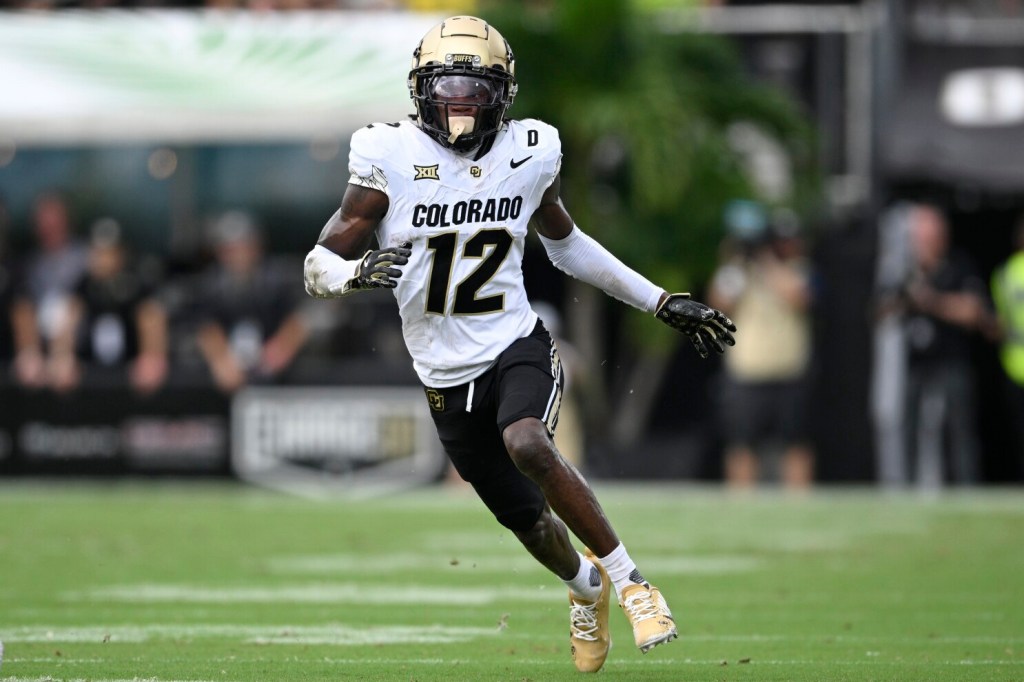
1. Travis Hunter, WR/CB, Colorado
The term generational football player isn’t one that should be thrown around lightly, but there is a high possibility that we could be discussing that kind of prospect when it comes to Travis Hunter. This young man has put himself in a territory of his own with his outstanding production on both sides of the ball throughout his collegiate career.
Some have questions about his ability to play both sides of the ball long-term at the next level, but I believe that while his workload will need to be managed, we have to account for him playing in the altitude of the Colorado Mountains. It’s possible his conditioning just might be different.
In order to understand what makes Hunter special, you must understand how his skill set has translated to both sides of the ball. He possesses elite-level ball skills; when the football is in the air, he automatically turns into a pass catcher no matter if he’s on offense or defense. The concentration he displays is second to none in this class. Hunter has a rep vs NDSU where the defender is draped all over him before the arrival of the ball, but he keeps his eyes on the football showcases great hand-eye coordination
Hunter also showcases elite short-area explosiveness on both sides of the ball. As a receiver, you wouldn’t classify him as a refined route runner, but he can find the hole in zones. He has lined up both inside and outside as both a defender and a pass catcher. The type of guy who wants to take on the challenge of the best WR on the field, no matter who they are or where they operate from.
While Hunter has the chance to be a really, really good wide receiver, he has the chance to be an absolutely special cornerback. Plays the CB position with such nuance, a master of his craft. Hunter has great patience when in phase and plays the position the way it’s meant to be played. He truly has that dawg in him and wants to be physical. Especially when deployed in man press, and at the stem of routes.
I feel comfortable with him both in man or zone coverage. Hunter has shown the ability to mirror and match receivers in man coverage, not just at the release,e but can almost run the route for you at times (see Colorado St ‘24).
Despite how good he is in man, he might be even better in zone, has such a spatial awareness and understanding of what routes belong in which area, and if he can/is allowed to make a play on it. He has an insane interception vs. TCU in ’23 & UCF in ‘24 where he breaks off his man to snag a diving INT in the flat.

2. Abdul Carter (EDGE) Penn State
Penn State has set the standard as one of the premier programs in terms of linebacker production both at the collegiate and NFL levels. For Abdul Carter, who has been a stalwart of the defensive front since his arrival in State College is no different than the rest.
Carter has been used in a multitude of alignments to impact the game, while he was used mostly at LB to start, accumulating 970 snaps off-ball through his first two seasons. However, during his junior season, the team made the decision to move him to EDGE, allowing him to showcase his capabilities as a pass rusher.
Carter possesses an elite first step out of his stance, exploding off the ball, making it a race to the corner. The bend he showcases once he gets to that spot is what sets him apart from his peers. He does a good job creating the illusion of a power rush before pivoting to a ghost move, taking advantage of blockers who have put themselves out of position, preparing for power.
While this has been successful for him, Carter will need to develop a secondary pass rush plan that showcases some semblance of an ability to win with power. Carter relies heavily on his athletic ability to win, but one has to wonder how the athletic tackles at the NFL level will challenge his ability when his finesse is matched.
Carter has room to grow in terms of becoming a potential full-time pass rusher and could benefit from more reps. He typically has an idea of how he will be successful. If the initial move doesn’t work, he counters in the most creative fashion. He’s typically just too agile for blockers to process recovery from the initial move to counter.
Though his athletic profile has proved to be a success, rushing the passer and even in coverage, dating back to his earlier days. The lack of power in his arsenal has proven to be an issue, specifically in the run support. This, combined with some necessary technical refinement — better hand placement, trouble disengaging from blocks once they are initiated, will provide some challenges to be productive on run downs.
Despite these questions, Carter is a high-IQ player, clearly does his homework. Carter understands how the offense wants to attack specifically on the ground, and he diagnoses the blocking scheme based on alignment and beats blocker to preferred gap.

3. Will Johnson (CB) – Michigan
Will Johnson offers the profile of one of the league’s next great cornerbacks. This profile is featured in both measurables, where Johnson’s long frame, and in phis lay style, where you see a physical player capable of commanding an island and eliminating options for the quarterback.
You feel comfortable deploying Johnson in both man and zone. He plays the position like a Chess game, understands where each ‘piece’ can be moved, and tries to bait you into his set. In zone, Johnson has an inept ability to watch through the QB while understanding what will go on around him.
You appreciate his IQ and route anticipation; he isn’t the kind of guy you can show something twice. Johnson has a great understanding of what he is being asked and how to use his athleticism and leverage to manipulate his area.
The first thing that jumps off the screen when watching Johnson is his click and close ability, place his foot on the ground, break on routes, and get after the football. He has great belief in his ability to break on a route, which leads to him taking some risks in the short and underneath area. He can occasionally be beaten on the double move. Still, the kid clearly does his homework and understands body language and how it relates to route combinations.
Johnson is a physical player at the stem of receivers’ routes, and can be a bit handsy, but this aspect of his game can and will disrupt timing. While Johnson was primarily deployed as an outside cornerback, he has shown a willingness and ability to play at the nickel, specifically where shadowing receivers (see Ohio State ‘23).
In terms of tackling, Johnson is a bit of an enigma in this area. It’s no secret that he’s a bit of an arm tackler, which causes more than his fair share of missed tackles. Yet you almost wish he were more consistent in this area because he actually wants to get his nose dirty. He knows how to make blockers miss, but when he gets engaged, not really the kind of guy to depart.
Johnson has also been deployed as a CAT blitzer from time to time and has shown an ability to get home, but doesn’t necessarily know what to do when he gets there. All in all, this is the type of player that quarterbacks always approach the LOS knowing where they are located because of how they impact the game. Johnson’s skill set should immediately translate to the next level and should see production no matter the scheme.

4. Mason Graham (DT) – Michigan
Mason Graham is a physical and powerful, high-effort player who has been used from a multitude of alignments across the DL. Typically spends his time dominating the B gap and will probably be best suited as a 3-tech at the next level, but has flirted with usage at the 1-tech and even as the 4i in a bit of a stand-up role.
Graham has a great understanding of leverage despite not having the most attractive frame. Very rarely do you see him out-positioned. Even on double teams, he does a great job dropping the back leg to seal off angles that secondary blockers can use to take him out of the play.
Despite his smaller frame and shorter arms, Graham possesses a pair of very fast and active hands that allow him to immediately make an impact at the point of attack. In fact, this may very well be his best attribute, making it tough for blockers to get a hold of him, and allowing him to set up a variety of counter moves off them.
He was trusted with a more consistent pass-rushing role in ‘24, where he offered an intriguing skillset in this department. His go-to move seems to be the swim, but he has shown an ability to utilize a rip and a semblance of a bull rush (see Minnesota ’24). Still, he doesn’t necessarily win as quickly as you’d like, but does enough to impact the play in multiple ways.
Watching Graham, his first step is immediately noticeable, along with a strong anchor that often allows him to hold his own even without the desired length. He does a great job deconstructing blocks, specifically when he’s asked to stack and shed. Graham keeps his eyes in the backfield and isn’t fooled by the misdirection.
Against the run, Graham is a high-IQ player, with a solid understanding of blocking concepts, where blockers are trying to work too, and how to use that to his advantage. He has a rep vs Texas ‘24, where he follows the pulling guard to lead him to the conflict.

5. Ashton Jeanty (RB) – Boise State
They don’t make running backs like Ashton Jeanty anymore. This young man plays a physical brand of football that has been missed at the position consistently. He’s what I like to refer to as a 60-minute player, as in most defenders are not going to want to match the violent mentality with which he plays with for the entirety of the day.
Posing a unique blend of size and speed, Jeanty often looks like a freight train when he builds up a full head of steam. With a firm, compact build, you cannot arm-tackle this guy. Jeanty possesses great contact balance; if your impact doesn’t have a purpose, he turns defenders into human pinball machines. You almost have to posture for position to bring him down or catch him while his feet are stymied.
Jeanty has a unique, upright frame when in the presnap process. While it’s not something I’d advise many to do, I believe his track and field background is on display in this area. Watch his feet at the snap, and you see him kick back to give himself a launching point — picks up momentum fairly quickly.
Jeanty matches that upright posture with an upright running style. While I wouldn’t say it’s an issue until it is, the 10 career fumbles to his name could be attributed to that style of play. Still, despite not possessing the desired pad level at the position, Jeanty isn’t the kind of guy you can tackle high. Or even low for that matter, as he’s shown an ability to make defenders miss with a juke or even a hurdle (hello track & field background).
He possesses great vision, often creating a crease for himself with the slightest of room. He has the patience to force defenders to commit to gaps early, to create other avenues for himself.
I’m also very intrigued by what he offers as a pass catcher. He showed real promise in this area in ‘23 with over 500 yards receiving. However, in ‘24, despite the team making a concerted effort to find creative ways to get him the ball, even lining him up out wide. Yet with his success as a rusher, it made it hard to find other ways to get him the football.
Jeanty profiles as a three-down player, capable of impacting the game both on the ground and through the air. His success as both a zone (353 reps in this area) and a gap (389 reps here) scheme makes him an appealing option across the board.

6. Malaki Starks (S) – Georgia
Malaki Starks is a special type of talent on the football field. We can talk about positional value and all things that go into it, but sometimes players of a specific talent level make the decision for you. Starks has filled a multitude of roles defensively from day one in Athens and has/continues to be more than comfortable doing so.
Typically, Starks has mostly rotated between deep safety to nickel but has a splash of outside reps in there. Yet with just 24 career reps along the outside, it’s nothing to write home about. As a magnificent coverage player both in man and zone, in man, Starks can match TEs and WRs in space, closing ground quickly and sticking to the hip.
There have been times when shiftier route runners have given him a run for his money (see Texas ‘24), but he has shown flashes, particularly against vertical routes. Starks can stay in phase until the receiver commits, flips his hips with ease, can use the boundary as his friend giving him an ability to locate the football without losing his man. A team should be excited about what he can and does provide from this area.
In zone, he quickly covers ground from sideline to sideline, often putting himself in position to make a play on the football. Starks is probably at his best as a deep safety, just is able to see the game clearly. There are times it feels like he’s playing a read and react brand of football from the nickel.
He’s displayed notable ball skills with six career interceptions and 14 pass breakups over the span of three seasons. I appreciate how he plays the football when it’s in the air, as he immediately becomes a receiver instead of a defender. Starks fights for position and attacks the football. As a tackler, Starks is a high-IQ player who easily diagnoses runs, often cutting off lanes to make a play (see Clemson ‘24).
He quickly gets downhill and displays great open-field tackle abilities. I appreciate these kinds of tacklers, as they aren’t really looking to make the ‘big hit’. Starks just wants to bring the ball carrier down, and he efficiently wraps up. I’d almost say he’s the kind of guy you could trust with your life in space.
Starks’ skillset is transcendent through many schemes. Just like his immediate impact upon his arrival at Georgia, Starks should be able to contribute to a defense from multiple alignments. He’s the type of player that could become the heartbeat of a franchise.
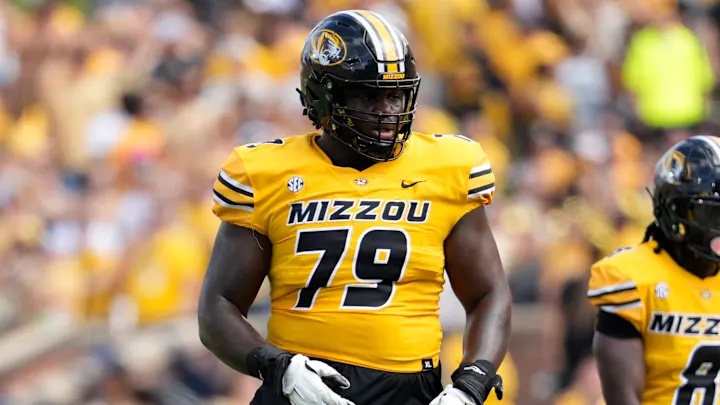
7. Armand Membou (OT) – Missouri
There has been a tried and true formula that teams typically stick to in terms of preference between tape or traits. However, there are times where specific prospects will push idealogical boundaries to the limits. Armand Membou is one of those players.
I wouldn’t say Membou possesses ideal measurables, but he has always been a student of the game and works tirelessly to perfect his craft. He offers a fine balance between mentality, nuance, and athleticism. Membou profiles well as a zone blocker, his lateral mobility pops off the screen, as he excels out in space and working to the second level.
I’m highly impressed with the job he does on reach blocks. He attaches to defenders, swinging his hips around, and sealing off the edge, opening avenues. This young man is a mauler, wants to finish reps. The type of guy that relishes pancake opportunities and doesn’t play with his food (see Arkansas ‘24). He has multiple reps where he has done his job but continues to drive defenders toward the sideline to assert his dominance.
While Membou excels as a run blocker, I’m intrigued by what he offers in pass protection. I’d like to see him be more meticulous with his hand locations. Though you have to appreciate how he uses his hands when hand-fighting. He packs some force behind his initial punch and does a good job displacing hands without losing leverage. So many times, defenders have gotten a hand on him first at the point of attack, and he just rips them away (see Vanderbilt ‘24).
Membou’s upper and lower body work well off one another. He maintains good hip flexibility, and when facing speed and bend around the edge, and is able to match by dropping the anchor, essentially ruining momentum and may even use a dead weight finish, piling on defenders who are already on the ground to finish off the rep.
There is the concern that Membou may struggle against rushers who offer a fair variety of length, due to his limited reach with his arms. However, you have to be encouraged by his adaptability (see Texas A&M ‘24). While there are a few concerns Membou should carry due to his lack of traits, it’s hard not to be attracted by a prospect who is technically sound for the most part, not to mention the potential position versatility. If the length makes you feel uncomfortable from the outside, Membou has shown the ability to translate from G to T.
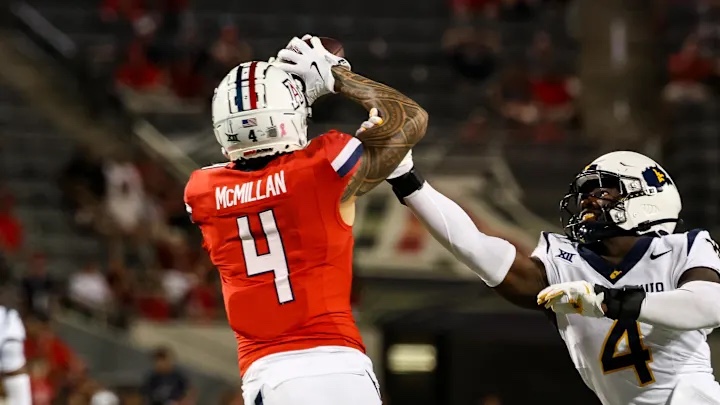
8. Tetairoa McMillan (WR) – Arizona
Tetairoa McMillian profiles as the prototypical X receiver at the next level. He’s easily identified on film by his long frame, both in height and arm length, which he utilizes well on a down-to-down basis.
McMillian offers an out-of-this-world catch radius that makes him difficult to defend. At the catch point, he aggressively attacks the ball at its highest peak. He showcases excellent play strength, fighting through contact to make some tough contested catches, in which he ranked third in the nation.
McMillian does a phenomenal job adjusting his body in the air to make a play on the football. He’s more like a quarterback’s best friend with his ability to bail them out. This also extends to the more routine receptions where McMillian often comes back for the football instead of letting the ball meet him. McMillian also does a great job of out-positioning defenders — his basketball and volleyball backgrounds are on true display here.
In terms of route running, McMillian isn’t the most nuanced in this area — he is more of a space finder, specifically against zone coverage. You grow to appreciate what he offers in the short and intermediate areas of the field, where he excels at the slant and whip routes, but often gets to his spots with limited false steps, specifically on breaking routes.
Down the field, McMillian has proven to be a consistent weapon, finishing seventh in the nation in receptions over 20+ yards in ‘24.
McMillian plays the game at his own pace. Some may complain about a lack of separation, but he shows an ability to create just enough while using his traits to his advantage. I wish he did a better job of utilizing leverage, but he shows multiple flashes, including a deep route vs Colorado ‘24, where he trails inside, turning his defender while leaving himself space along the boundary, where he eventually returns with separation.
McMillian could be more physical at the stem of routes and upon the release. He often relies on a shoulder dip to evade contact, which typically works for him, but he can also have his timing disrupted by more physical cornerbacks. After the catch, McMillian offers some quality abilities based on size and agility, and can be a handful to bring down with a head full of steam.

9. Will Campbell (OL) – LSU
Will Campbell has been a mainstay along the LSU offensive line since arriving in Baton Rouge. Campbell was baptized by fire at the age of 18, matching up with some of the best pass rushers the SEC had to offer. Since that moment, Campbell has logged nearly 1,600 snaps in pass protection and over 950 in run blocking, showcasing the nuance and consistency of a player capable of being the face of an offensive line unit.
It would be easy to start with the elephant in the room. Despite being a three-year starter with over 2,500 snaps from the left tackle position, there is concern about whether Campbell can fill that same role at the next level. With 32 5/8-inch arms, Campbell falls below the average threshold for arm length on the outside. This has set the stage for a potential move to guard, which, despite his elite talent, opens up an entirely different conversation around positional value that could impact his draft status.
As a prospect, Campbell is a fine blend of nuance and athleticism. He possesses natural strength that makes him difficult to move off his spot. He responds to power with a solid anchor that, while occasionally challenged, has shown the ability to reset without issue. This is paired with powerful, accurate hands that latch onto defenders with intent and purpose.
There are some concerns, however, with how Campbell handles speed. His success in reps often hinges on whether his initial punch lands. Against speed rushers—when it’s a race to the edge—if that first jab misses, Campbell tends to overcompensate in an effort to regain positioning. Much of this can be attributed to his lack of ideal length.
Campbell attacks double teams with force and climbs to the second level with ease when needed. Just as with his pass protection, a move to guard could help mitigate any concerns related to his arm length in the run game, allowing him to operate more in a phone booth than in open space.

10. Jahdae Barron (CB) – Texas
Versatility is the name of the game when it comes to Jahdae Barron, who has been deployed in a multitude of ways throughout his tenure in Austin. For the better part of two seasons, Barron primarily lined up in the nickel before being used more extensively on the outside during his final season.
Barron sees the field well when the game is kept in front of him, consistently finding ways to impact plays regardless of alignment. As a blitzer and in run support, he picks his spots with precision, showcasing a physical presence who plays with clear intent to deliver a blow to ball carriers. While there are occasional inconsistencies as a tackler, he’s proven he’s not afraid to get down and dirty.
Barron played with a noticeably more aggressive mentality when given the freedom to move around, compared to being stationed exclusively on the outside. But when he flips the switch, he lives around the football (see Oklahoma ‘23).
On tape, he presents as a patient player, both in tackling and coverage, rarely biting on misdirection or gimmicks. He uses the quarterback as a guide, and once he reads the play, he plants his foot and drives on the football, often arriving at or near the same time as the ball.
Though Barron was typically utilized in zone coverage, he showed flashes of effectiveness in man coverage. However, his aggressive tendencies and lack of recovery speed can leave him vulnerable to being beaten deep.
While Barron mostly played in off coverage when aligned outside—often using a bail technique—Texas rarely put him in situations where he had to turn and run without leverage. This helped mask the fact that he doesn’t always play as fast as his natural speed might suggest.
At the catch point, Barron has demonstrated the ability to play through the football, making life difficult for receivers, particularly on short and intermediate routes. Despite recording just three interceptions through his first few seasons, he broke out this past year with five picks, showing a knack for making plays on the ball. His high football IQ routinely puts him in position to capitalize (see Alabama ‘23).
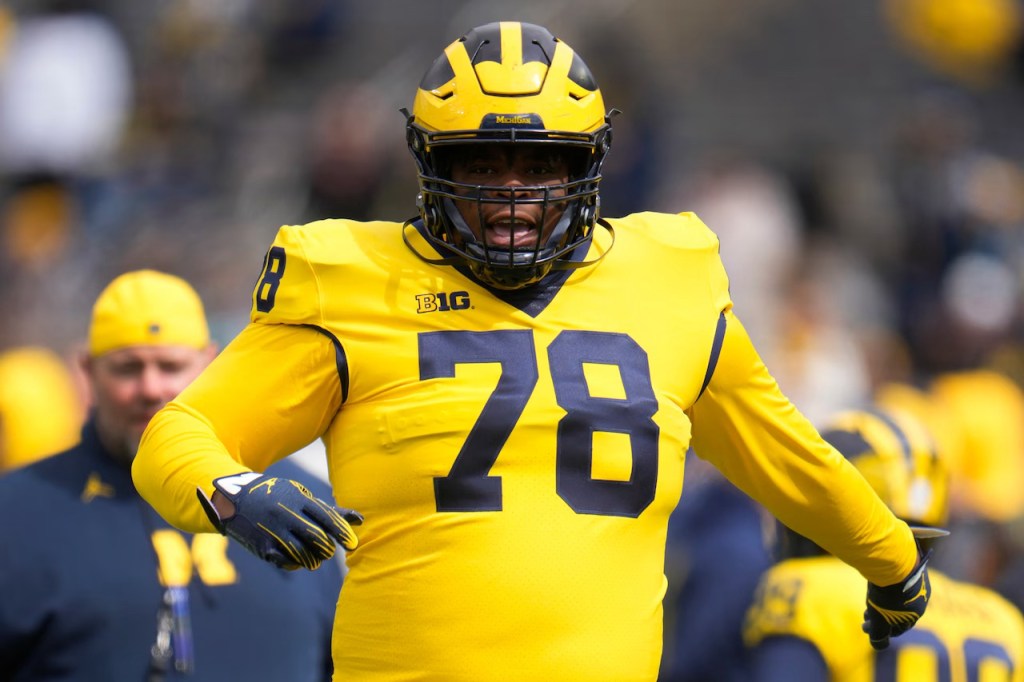
11. Kenneth Grant (DT) – Michigan
Kenneth Grant is an absolute mammoth of a human being. The term “a rare blend of size and speed” gets tossed around often this time of year, but it fits no prospect better than Grant. He’s a people-mover at the point of attack—few blockers have the frame or anchor to keep him in check.
Grant is highly effective in one-on-one situations. He demands double teams, and even then, holds his ground with excellent pad level. He doesn’t lose leverage battles—he dictates them, taking blockers where he wants to go.
There’s a rep against Indiana where the Hoosiers attempt to run outside zone. As the center and guard try to combo block him before the center climbs to the second level, Grant flashes impressive lateral agility, attacks the guard, and tosses him like he’s nothing. He moves absurdly well for a man of his size, particularly in short areas. He’s an elite-level run defender—his sheer size creates problems for interior offensive linemen. With his ability to burst off the ball, Grant generates immediate pressure consistently, often blowing up plays before they have a chance to develop (see USC ’24).
At this point, Grant isn’t a fully refined pass rusher, but he shows promising flashes. His go-to is the bull rush, but when he needs to mix it up, he’s shown the ability to win with a swim move or a push-pull technique.
Grant can impact the game from multiple alignments. While he primarily operated out of the B gap—with over 730 reps from that spot across three seasons—he also has the versatility to play as a 0-tech or even from the A gap, where he’s logged 300 reps.
The impact Grant leaves on a game doesn’t always show up on the stat sheet. But whether it’s tackles, sacks, or pressures, no metric truly captures the disruptive presence he brings to the field.

12. Tyler Warren (TE) – Penn State
Tyler Warren established himself as THE focal point of the Penn State offense. Whether it was as a runner, receiver, or even passer—a nod to his days as a high school quarterback—there wasn’t a role Warren wasn’t willing or capable of taking on.
With the goal of finding creative ways to get the football in his hands, Warren was deployed in a variety of alignments. Over the last three seasons, he saw nearly even snaps in-line (404) and from the slot (388), with an additional 119 snaps lined up out wide. He was also utilized as a wildcat quarterback and even experimented with fullback looks, making it essential for defenses to locate him presnap.
While Warren adds value as a runner, it’s what he does as a pass catcher that will carry him at the next level. At 6’5″, you appreciate his large catch radius and willingness to play above the rim—a clear reflection of his basketball background, which has benefited so many at the position. He shows solid body control in the air and consistently plays through contact to make tough grabs.
Warren moves impressively well for his size, especially in space, where he becomes a nightmare to bring down. He plays with physicality at the stem of his routes, particularly on in-breakers, using his frame to shield off defenders.
Most importantly, he possesses a reliable pair of hands. Although he recorded six drops during the 2023 season, he only had five combined across all prior seasons.
He’s not the most refined route runner, nor does he have an overly diverse route tree, but he thrives in the quick game—on flats, quick outs, and whip routes. Penn State often used motion to manufacture touches for him. While he has shown an ability to get vertical, many of those opportunities were schemed up rather than him consistently winning downfield.
The one area Warren will need to improve is as a blocker. He has all the tools—size, strength, and the willingness to engage—but lacks technical nuance. Improving his hand placement and pad level will be key to becoming a more consistent contributor in this area.
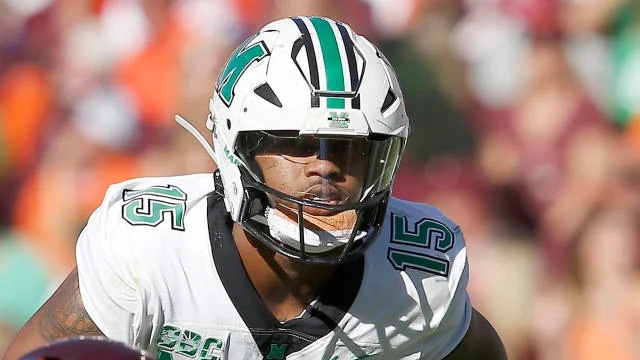
13. Mike Green (EDGE) – Marshall
As the FBS leader in sacks, Mike Green has proven to be one of the most impactful pass rushers in this class. We can have the conversation about the level of competition and how much it factored into his statistical success, but between the Ohio State tape and his reps at the Senior Bowl, the old adage holds true: it doesn’t matter where you play—if you can ball, they’ll find you.
It’s hard not to fall in love with what Mike Green brings as a pass rusher. He offers a beautiful blend of speed and power, exploding off the ball and translating that speed into power on contact. He uses his hands and length effectively, and though his arms measure just 32 inches, he plays much bigger. Green is a physical player who immediately gets into your chest at the point of attack with an initial jab that you’re going to feel the next day.
The best part of Green’s game is his high-level pass rush plan. He just knows how to tie everything together. This is exactly how you’d want a player to use his “superpower”—knowing that blockers must respect his speed, and using that to set up the rest of his arsenal. His counters are a blast to watch.
Green has the ability to throw a variety of looks at blockers, keeping them on their heels throughout the game. He’s shown the Rip, Swim, Ghost, Spin, and Bull Rush—an arsenal so deep it sometimes feels like he’s playing offense while the tackle is stuck reacting on defense. He’d be a natural fit in a wide-9 scheme, where he could isolate tackles and really stress them with his burst and bend.
His versatile approach allows him to dictate the outcome of reps more often than not. However, there are times when he gets drawn into a battle of attrition against bigger tackles—a fight he doesn’t necessarily want to engage in snap after snap.
As a run defender, Green flashes real potential. He may not rack up huge numbers in this area, but he’s the kind of player who makes the job easier for everyone around him.

14.) Jihaad Campbell (LB) – Alabama
The conversation around positional value takes an interesting turn when discussing hybrid players like Jihaad Campbell. He’s a young man with highly enticing traits as a pass rusher, despite having just 159 career collegiate reps in that role. It’s worth noting, however, that Campbell was a five-star recruit coming out of high school—largely due to what he showcased off the EDGE.
In a room that featured multiple future first-round EDGE prospects, Campbell transitioned to off-ball linebacker to earn more playing time. This shift allowed him to explore an untapped side of his skillset, including dropping into coverage and seeing the game from a completely different perspective.
Off-ball linebacker is one of the more difficult positions to project from college to the pros, but Campbell’s traits make him an enticing gamble. While he may not have the ideal arm length to be a full-time pass rusher, he’s shown he can still win with explosive athleticism, bend, and the bit of length he does have.
You wouldn’t call Campbell the most instinctive run defender at this stage, but his athletic ability often helps him recover and make plays. He has true sideline-to-sideline range, great downhill burst, and excels in open-field tackling. The goal is getting him to play like this consistently, down after down.
Campbell still needs to find a middle ground in his approach. At times, he’s overly aggressive—falling for eye candy or making false steps that take him out of position. Other times, he’s too patient, allowing himself to get caught in traffic as blocking schemes develop. With time, the game should begin to slow down for him. He’s already shown flashes of what that will look like. He just needs to trust his process, believe what he sees, and play downhill with confidence.
What’s especially exciting is what Campbell has shown in coverage (see Georgia ’24). He has a natural ability to turn and run with tight ends and even some slot receivers on routes attacking the middle of the field. Campbell excels at keeping plays in front of him, playing with a quiet confidence—almost an arrogance—that nothing is getting behind him. He manages his area of the field with purpose and makes opponents earn every yard.
Campbell is by no means a finished product, but he offers a solid baseline and an intriguing ceiling at the next level. He currently profiles better against the pass than the run, but to unlock his full potential, a team will need to get creative with his usage—allowing his rare versatility to continue shining.
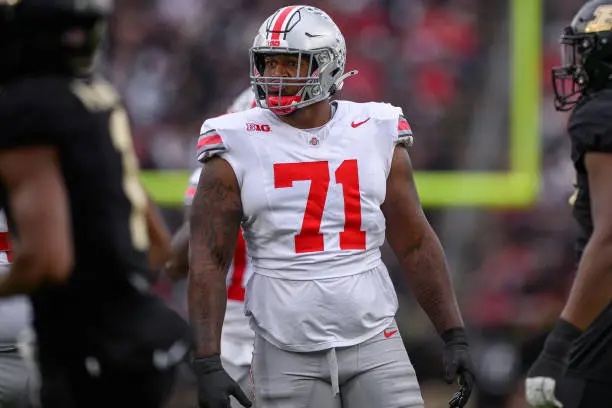
15. Josh Simmons (OT) – Ohio State
Josh Simmons presents an enticing gamble on traits, athletic ability, and a steady year-to-year developmental trajectory. Initially recruited as a guard, Simmons transitioned to right tackle during his redshirt season at San Diego State. In his lone season as a starter there, he logged just under 800 snaps—fairly evenly split between pass protection (404) and run blocking (395).
Following his transfer to Ohio State, Simmons once again showcased his positional versatility by making the switch from right to left tackle. What stands out most in Simmons’ game is his continued development over the past three seasons. While he’s always had the traits to be a true bookend tackle, there are still areas of nuance that require refinement.
To say Simmons was a tale of two players from 2022 to 2024 would be an understatement. For context, he racked up 25 penalties over a two-year span split between San Diego State and Ohio State. Yet, through six games this season, he had been flagged just once—a dramatic sign of growth.
His hand usage has been one of the more enjoyable aspects of his development. From 2023 to 2024, the improvement in this area has been clear—not just in the power of his initial punch, but in its placement. Despite his massive frame, Simmons is a fantastic athlete. He handles both speed and power effectively on the edge, with nimble feet that allow him to mirror quickly, and a sturdy base that’s tough to collapse with power moves.
Assuming he returns to full health, there’s a lot to like about what he brings when allowed to operate in space. Prior to this season, Ohio State’s bread and butter in the run game came through wide zone concepts—schemes that allowed Simmons to showcase his lateral agility and ability to wreak havoc at the second level.
However, Simmons suffered a torn patella tendon in October, which required season-ending knee surgery. How that injury affects his growth and how he checks out medically will be key questions moving forward.

16. Mykel Williams (EDGE) – Georgia
Mykel Williams has been an impact defender for the Georgia defense from day one, leading the team in sacks on a national championship winning defense as a true freshman. The goal was always for Williams to became the next featured pass rusher off the EDGE, however for one reason or another, that never came to fruition as Williams was asked to fill multiple roles along the Georgia defensive line during his tenure.
Williams and his alignment have been interesting to watch. You grow to enjoy how the defensive coaching staff was able to maximize the unique skillset of Willams and teammate Jalon Walker by finding creative ways to deploy them for positive variances for the defense.
Williams is more of an EDGE player but his skillset and abilities as a run stopper, allowed Georgia to deploy him from the interior as well. With 638 reps outside of tackle, 408 reps over tackle, and even some usage in both the A & B gap and off ball in some metric, Georgia found different ways to allow Williams to impact the game.
Typically Williams excels as a run stopper. He plays the game bigger than what he truly is from a weight standpoint but maximizing all of his 34 inches arms. This length allows him to excel at setting the edge and maintaining gap integrity, while still making plays on the football even if he hasn’t detached from the block.
As growth to make as a pass rusher. Should provide usage as an early down player to the start of his career. Despite limited nuance as a pass rusher, he has accumulated a fair number of sacks over his three years which gives you promise for the future.
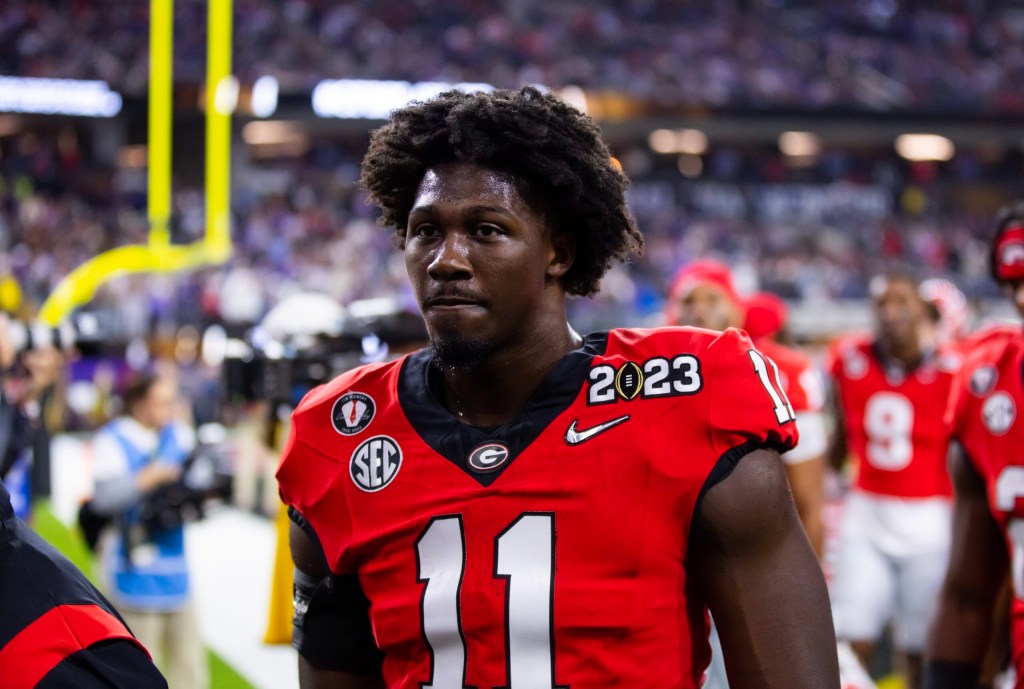
17. Jalon Walker (LB) – Georgia
When you watch Jalon Walker, it’s hard not to be enticed by what he could become in a variety of roles. The real question is: which role is he best suited for at the next level? His versatility and deployment can be seen as strengths, but Walker’s size paints the picture of a tweener—someone with growth still to be made at both positions. That said, he’s already shown a solid baseline to be considered for either.
Walker plays a “see ball, get ball” brand of football. He’s more reactionary than you’d ideally like, which makes sense given the relatively limited amount of football he’s played. However, when he’s able to process and diagnose plays, he does a solid job shedding blocks and making plays on the ball (see Texas ’24). At this stage in his development, he appears more comfortable when the game is in front of him, rather than when he’s asked to read and react off the edge.
Despite having average arm length, Walker plays bigger than the measurements suggest. He uses his 32-inch arms well at the point of attack—engaging, then extending to control leverage while working to shed blocks. His hand usage is underrated—his swipes and rips can be violent when they land cleanly. Still, he shows inconsistency in timing and placement, which can leave him vulnerable to blockers getting underneath his pads.
Walker brings a stout, physical demeanor to the field, but he also flashes surprising twitch. His first step, lateral mobility, and change of direction are impressive, especially when attacking downhill. He does a good job converting speed to power and provides value as a pass rusher, both off the EDGE and from the second level. What’s particularly intriguing is how developed his rush plan can look—despite not playing the role full-time.
One of the more unique aspects of Walker’s usage at Georgia was how often he was deployed as a QB spy—leveraging his athleticism to limit the impact of mobile quarterbacks throughout the season. He also flashed coverage ability, something the coaching staff leaned into more during his junior year. While he may not be a full-time player in this area just yet, he understands his zone and executes his responsibilities well.
Whatever role Walker is asked to play at the next level, he has the upside to succeed in it. He offers early-down value as a linebacker with his ability to stack and shed at the second level. When paired with his flashes as a pass rusher, Walker becomes an appealing selection. He may be considered scheme-specific if a team wants to truly maximize his skillset, but the thought of a player still scratching the surface—given his age and experience level—could be too tempting to pass up.

18. Shedeur Sanders (QB) – Colorado
There aren’t many more polarizing prospects in this class than Shedeur Sanders. As the son of Hall of Fame cornerback Deion Sanders, the bar has already been set higher for Shedeur. However, if you strip the prospect of his historic name sake and NFL family bloodline, you find a field general that is cut from a different cloth than the modern NFL quarterback.
For starters there aren’t many quarterback who have played the amount of football this young man has up to this point, with 8 years of starting experience — a four year starter at both the high school and college level. For Sanders, he is a pure drop back passer at heart; he attacks the field at all three levels but the work he does in the middle of the field speaks volumes to where he is in his development as a passer.
You appreciate not just his accuracy but his location with the football — a purposeful passer is what I like to call it. For example, against Texas Tech, there’s a rep where the window between Hunter and two Red Raider defenders is rapidly closing, yet Sanders places the ball on the back hashes instead of the numbers, giving his receiver the space needed to make a play.
Sanders has modest arm talent; wouldn’t consider it be by elite by any stretch of the imagination but can make NFL throws. There are concerns about whether his arm strength can withstand the demands of a 17-game season, but most of his inconsistencies seem to stem more from passing mechanics than a lack of arm strength.
One area where Sanders could improve is in his dropbacks. He doesn’t always get into his drops with the necessary urgency, which leads to some inconsistency between his top half and bottom half. He doesn’t typically follow the standard 5 or 7-step drop—he seems to fade away in the pocket, which may take some of the zip off his throws.
He throws the football with an over the top release that is detrimental in terms of the amount of velocity he is able to generate and how the football arrives to its spot occasionally. Would like to see him get that cleaned up along with some of his footwork inside the pocket. Wish he got into his drops with more urgency would help bring some consistency between his top half and bottom half.
It’s impossible to discuss Sanders without addressing his mobility, or, for some, the lack thereof. For me, the issue isn’t necessarily his ability—it’s his desire to remain in the pocket. Sanders takes pride in winning from the pocket and has shown that scrambling is always a last resort. That being said, he’s more than just a quality athlete, showing an ability to make plays outside the structure when needed.
However, this style of play doesn’t come without its penalties. Sanders often needs to learn when to let plays die or simply take what the defense gives him. While the offensive line doesn’t always afford him the necessary time, he still takes too many sacks trying to play hero ball.
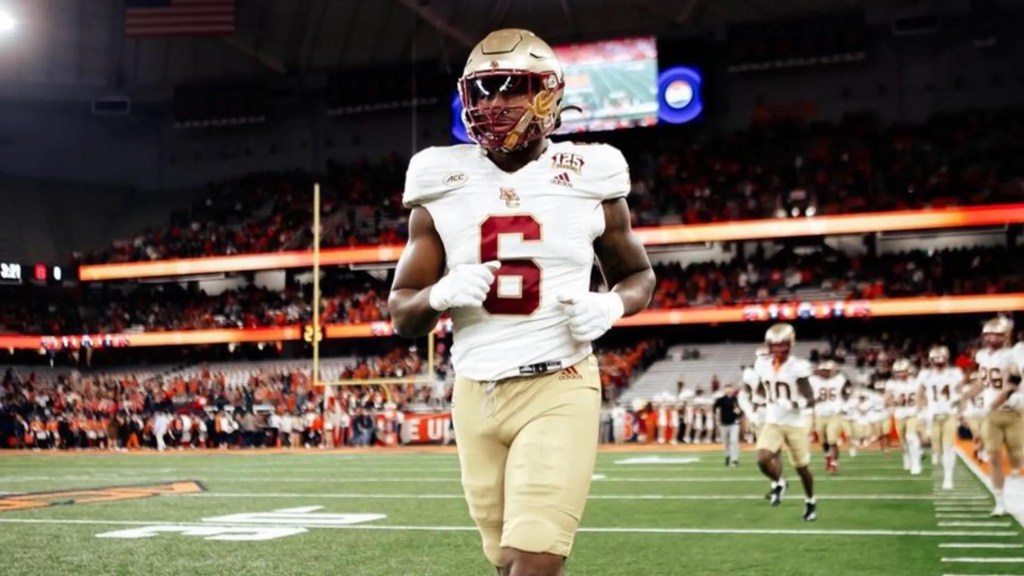
19. Donovan Ezeiruaku (EDGE) – Boston College
There aren’t many pass rushers that offer a better resume and pass rush profile than Donovan Ezeiruaku. Coming off a season where he tied Boston College’s program single-season sack record at 16.5, Ezeiruaku showcases the pass rush game plan of a 10 year veteran at the position.
He has an absurdly deep bag of pass rush counters that feels like it includes every move in the book. Ezeiruaku typically garners his wins but utilizing a tantalizing ability of speed off the edge that gives the most nuanced tackles some difficulty. That said, his bag is almost exclusively won from a finesse standpoint, with limited to no power moves in his arsenal.
I’d love to see Ezeiruaku add an element of power to his game. While he is able to get away with this in most pass rushing situations, it will be interesting to see how that ideology will hold up at the next level as he get matched up with tackles that can equate or top his athletic prowess.
Against the run, Ezeiruaku is an interesting evaluation. He isnt really successful in a read and react or stack and shed role. He’s much more comfortable when he can keep his feet moving utilizing speed. Because of this, there are times he can go under blocks instead of through them which have shown moments of putting him out of position occasionally. Part of this comes down to his smaller measurables for the position, but he has shown an ability to get consistent production out of this frame up to this point.
He plays the game with the motor of a Toyota, it almost never stops. His high effort, play to the whistle mentality often leads to him being able to get sacks by typically just retracing his steps back to the passer. Ezeiruaku doesn’t really offer much from a coverage standpoint, and will probably not see much if any usage here at the next level.
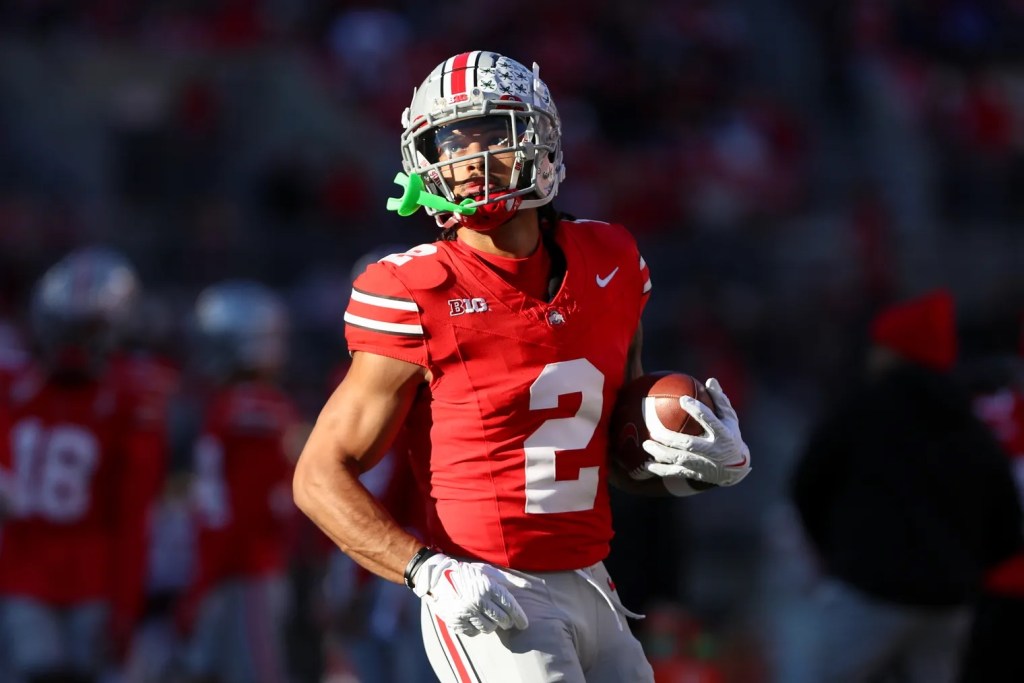
20. Emeka Egbuka (WR) – Ohio State
Emeka Egbuka has all the tools to become a dependable chain mover at the next level. The former five-star prospect has worn a ton of hats in the Buckeye offense. He’s presented himself to be a bit of a security blanket for quarterbacks.
Egbuka finished his time in Columbus as the most accomplished receiver in Buckeye history, which is astonishing given the boatload of talent he has had the opportunity to play next to at the receiver position.
Egbuka offers some three-level threat capabilities. In the short area, Egbuka showcases himself as quite the YAC threat. I often refer to him as a smooth criminal — despite not being quite the ‘mover or shaker,’ he’s really fluid with the ball in his hands and seems to find a crease.
In the intermediate area, Egbuka isn’t afraid to work the middle of the field or take on contact to haul in the football. Egbuka is ‘quicker’ more than he is fast. He isn’t really the type to run past you. Yet he’s shown flashes of the ability to win down the field with nuance and manipulation.
It’s the little things that make you appreciate Egbuka as a route runner. He has a great understanding of leverage and how to utilize it against the defensive back to create separation. He possesses a quality feel for coverages, what defenders are being asked, and where to attack them. Egbuka has shown the ability to be really good with spacing and using clear outs and picks as they are meant to be utilized.
The model of consistency, he possesses a pair of reliable hands and great hand-eye coordination, often looking the football into its destination. This is more than likely due to his days as a Center Fielder in high school. Despite a limited catch radius, Egbuka has proven to have the ability to make difficult catches in traffic with great body control. Though he has had the occasional focus drop, it isn’t a significant cause for concern.
Egbuka has showcased valuable ability as a blocker both along the perimeter and on the move. He often finds work even in condensed formations against front-seven defenders. This usage has led to big plays for the Buckeyes both on the ground and through the air — he’s also shown an ability to disguise his job, which often allows him to leak out unaccounted for (see Indiana ‘24).
21. Colston Loveland (TE) – Michigan
22. Cameron Ward (QB) – Miami
23. Matthew Golden (WR) – Texas
24. James Pierce Jr (EDGE) – Tennessee
25. Walter Nolen (DT) – Ole Miss
26. Trey Amos (CB) – Ole Miss
27. TreVeyon Henderson (RB) – Ohio State
28. Grey Zabel (OL, ) – North Dakota State
29. Kelvin Banks Jr (OT) – Texas
30. Shemar Stewart (EDGE) – Texas A&M
31. Shavon Revel (CB) – East Carolina
32. Luther Burden III (WR) – Missouri
33. Derrick Harmon (DT) – Oregon
34. Omarion Hampton (RB) – North Carolina
35. Xavier Watts (S) – Notre Dame
36. Nic Scourton (EDGE) – Texas A&M
37. Tyleik Williams (DT) – Ohio State
38. Josh Conerly Jr (OT) – Oregon
39. Darien Porter (CB) – Iowa State
40. Elic Ayomanor (WR) – Stanford
41. Nick Emmanwori (S) – South Carolina
42. Tyler Booker (IOL) Alabama
43. Landon Jackson (EDGE) – Arkansas
44. Carson Schwesinger (LB) – UCLA
45. Jayden Higgins (WR) – Iowa State
46. Maxwell Harrison (CB) – Kentucky
47. Quinshon Judkins (RB) – Ohio State
48. Darius Alexander (DT) – Toledo
49. Mason Taylor (TE) – LSU
50. Donovan Jackson (OL) – Ohio State
51. Tre Harris (WR) – Ole Miss
52. TJ Sanders (DT) – South Carolina
53. Kaleb Johnson (RB) – Iowa
54. Andrew Makuba (S) – Texas
55. Marcus Mbow (OL) – Purdue
56. Demetrius Knight Jr. (LB) – South Carolina
57. Jack Beck (WR) – TCU
58. Alfred Collins (DT) – Texas
59. JT Tuimoloau (EDGE) – Ohio State
60. Benjamin Morrison (CB) – Notre Dame
61. Harold Fannin Jr. (TE) – Bowling Green
62. Cam Skattebo (RB) – Arizona State
63. Azareye’h Thomas (CB) – Florida State
64. Jalen Royals (WR) – Utah State
65. Ashton Gillotte (EDGE) – Louisville
66. Aireontae Ersery (OT) – Minnesota
67. Omar Norman-Lott (DT) – Tennessee
68. Elijah Arroyo (TE) – Miami
69. Tate Ratledge (OG) – Georgia
70. Devin Neal (RB) – Kansas
71. Jack Sawyer (EDGE) – Ohio State
72. Jacob Parrish (CB) – Kansas State
73. Kyle Williams (WR) – Washington State
74. Bradyn Swinson (EDGE) – LSU
75. Ozzy Trapilo (OT) – Boston College
76. Jared Wilson (IOL) – Georgia
77. Shemar Turner (DT) – Texas A&M
78. Princely Umanmielen (EDGE) – Ole Miss
79. Jaylin Noel (WR) – Iowa State
80. RJ Harvey (RB) – Central Florida
81. Jeffery Bassa (LB) – Oregon
82. Cameron Williams (OT) – Texas
83. Josaiah Stewart (EDGE) – Michigan
84. Dylan Sampson (RB) – Tennessee
85. Cobee Bryant (CB) – Kansas
86. Anthony Belton (OT) – NC State
87. Jared Ivey (EDGE) – Ole Miss
88. Wyatt Milum (IOL) – West Virginia
89. Lathan Ransom (S) – Ohio State
90. Olawafemi Oladejo (EDGE) – UCLA
91. Damien Martinez (RB) – Miami
92. Gunnar Helm (TE) – Texas
93. Kyle Kennard (EDGE) – South Carolina
94. Xavier Restrepo (WR) – Miami
95. Kevin Winston Jr. (S) – Penn State
96. DJ Giddens (RB) – Kansas State
97. Charles Grant (OT) – William & Mary
98. Jalen Milroe (QB) – Alabama
99. Jordan Burch (EDGE) – Oregon
100. Chris Paul Jr. (LB) – Ole Miss



 The Philly Blitz
Leave a comment