

Welcome to the Big Ten, where smash-mouth football historically is the name of the game.
The heart of the Midwest, where weather can be torrid and games are dominated by efficient rushing attacks and superior defense. Even as evolution continues the advancements of our beautiful game, the brand remains strong.
As they say, the more things change, the more they stay the same. Look no further than the reigning National Champion, the Michigan Wolverines, who showcased a roster and coaching staff that epitomized the roots in which this conference was founded.
It takes a specific mentality and level of physicality to be successful in this conference.
However, in today’s era of college football, the best ability is adaptability. Change is always upon us, whether it be a coaching carousel, the rise of the transfer portal, or, in the Big Ten’s case, conference realignment.
With the death of our beloved Pac-12, there were multiple high profile programs available to formulate what has become a Super Conference in its own right.
What we initially referred to as the heart of the Midwest has taken a life of its own, spreading towards the Pacific. Insert Oregon, Washington, USC, and UCLA, each of which program will look to leave its own mark on the Big Ten early and often.
Now as worlds collide, ideologies are tested, and divisions are officially dead, we will officially see the best two teams the Big Ten has to offer. Now how things play out between then and now is up for us to discuss.
Introducing the Big Ten Preview:

Team of Interest: Ohio State
At this time last season, the Ohio State Buckeyes were coming off a second consecutive loss to their arch-rival Michigan Wolverines and a season that finished on the doorstep of a National Championship appearance as a missed field goal on the final play sent Georgia to an eventual title win.
As expected, the expectations of the 2023 season were through the roof.
The task was simple, because these are always the goals:
- Beat Michigan
- Win a national championship.
Neither of which took place; in fact, the Buckeye team didn’t even make the CFB Playoffs, nor did they win a Bowl game. A clear failure to meet expectations not just by Ohio State standards but any College Football Blue Blood.
Yet here we are about a year later and for the third consecutive season, the Buckeyes try to exercise the demons of The Team Up North. And somehow those expectations have grown to even greater heights.
We’ve had the conversation as to why this season is so important for the future of Ryan Day, but somehow this season is actually bigger than Ryan Day. This Ohio State team returns an overwhelming 61% of its total production from last season, with multiple key players like, Emeka Ebuka, Denzel Burke, J.T. Tuimoloau, and more. These are players who’ve returned with the expectation to accomplish what every great Buckeye group expects to do.
Offensively, despite the loss of generational talent Marvin Harrison Jr., the wide receiver room continues to be one of the best in the nation. Not only with the aforementioned return of Ebuka, but landing the number one overall prospect in the 2024 class in Jeremiah Smith and the expected breakouts of Carnell Tate, Brian Hartline’s group continues to be set for the foreseeable future.
When discussing the Ohio State offense, however, there are three factors that coincide with how the success of this group plays out.
First, Ryan Day has given up play-calling duties. This is something he has struggled with doing for about a year now. However, the fact that the guy he is conceding the task to is the most important part of this equation.
Chip Kelly isn’t just an excellent play-caller at the collegiate level, he’s actually the guy who gave Ryan Day his start both as his quarterback at the University of New Hampshire and as a coach. Kelly brought Day to both Philadelphia and San Francisco at the NFL level as his QB coach. A lot of the principal that Day loves offensively, he actually learned from Kelly, so having the ability to trust the guy that taught you with your offense has to be a breath of fresh air.
Day, however, as mentioned, is famously hands-on with the quarterback position, and with the Buckeyes being in the middle of the most important battle at the position since 2015, this brings us to point two: Who will win the QB battle?
The expectation is that Will Howard, who was bought over from Kansas State, should be the guy, but Devin Brown isn’t going down without a fight. Not to mention the gift that Bill O’Brien, the former offensive coordinator (for all of 2 minutes), left behind in freshman standout Julian Sayin waiting in the wings. Now who will take snaps under center for the Buckeyes in 2024, depends on how the group in front of them performs.
Which brings us to point three: Ohio State and its struggles up front last season were well noted. In particular, the inability to run the ball. While this season, the rushing attack should be much improved based on not just the continued health of TreVeyon Henderson, but also the acquisition of former Ole Miss back, Quinshon Judkins.
This year’s offensive line unit will be much more experienced than last season. Guard Donovan Jackson is entering his third year as a starter, while tackles Josh Simmons and Josh Fryar are heading into their second season as starters. Additionally, the addition of former Alabama center Seth McLaughlin adds valuable experience. While some concerns may remain, this unit is poised to make significant strides this season.
Team of Concern: Michigan
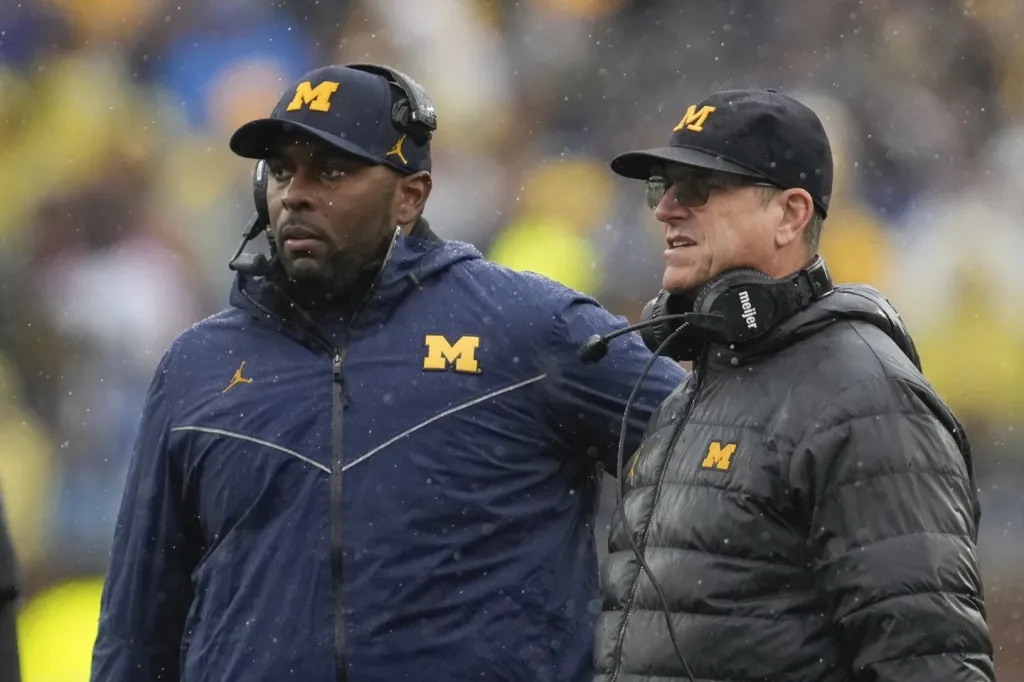
As previously mentioned, the Wolverines are the defending National Champions, largely in-part due to the roster and coaching staff assembled by Jim Harbaugh, which perfectly embodied the essence of Big Ten football.
Their success was driven by an offensive line that won the Joe Moore Award two years in a row and a top-five defense. This combination allowed them to play a brand of football that few teams could match up against, both offensively and defensively.
Now heading into 2024, we see a Michigan team that is essentially a shell of itself in terms of the production it brings back. The most notable change has to start at the top, with Harbaugh departing for a job at the NFL level. The coaching transition, however, should be a seamless one as former offensive coordinator Sherrone Moore steps in place. Moore served as the interim head coach for four games this past season while Harbaugh served a suspension.
The first order of business for Moore as the head coach was finding a quality replacement for defensive coordinator Jesse Minter, who also followed Harbaugh to the NFL. Players stressed the importance of wanting to keep the same schematic structure defensively. Moore obliged by hiring the person who could be considered the ‘Godfather’ of this style of defense: Wink Martindale.
“Yeah, the players were super adamant about keeping that, and Wink, he was way on board with it,” Moore said. “So they’ve definitely kept those pillars, and they’re excited for the defense. They’re excited for what’s going to happen and all the tweaks and all the things that they’re doing, but making sure that they’re all in a great position, which he’s done a really good job of doing.”
On the field, however, this Maze and Blue unit only managed to return 36% of its total production, as it comes off a program record of 13 players selected in this past year’s NFL Draft.
To put it in perspective, they only return 24% of their production on an offensive front that lost all five starting offensive linemen, the nation’s leading rushing touchdown scorer, both starting receivers, and the starting quarterback.
While returning impact players such as Coslton Loveland and Donovan Edwards will bring a sense of consistency to the offense, ultimately the success of this group will come down to quarterback play.
In a room where experience is limited, who will be the next man under center for the Wolverines is widely unknown up to this point. Alex Orji is the assumed current leader in the clubhouse due to his skillset as a rusher, although he has questions to answer in terms of his potential as a passer with just one career passing attempt to his name.
While the offensive side of the ball may still be a work in progress, the defensive unit remains strong. With the return of defensive tackles Mason Graham and Kenneth Grant, along with the presence of the nation’s (potential) top cornerback, Will Johnson, it’s safe to expect that this group will continue to be the cornerstone of the program.
It won’t take long for us to find out exactly what this Michigan group is made of, as they are faced with an early-season bout with the Texas Longhorns coming to town in week two. In this matchup, Michigan will have the opportunity to change the early narrative that surrounds the program, but as it currently sits, there are concerns about how well the offense can hold up its end of the bargain compared to its defensive counterparts.

Team with most to prove: Penn State
Are you okay with mediocrity? Perfectly fine being at the top of tier two? Is this a Penn State conversation, or is this a James Franklin conversation?
Given the obvious nature of Franklin being the head coach of the Nittany Lions, that answer falls somewhere in the middle.
If you’re both parties, however, you have to feel a sense of urgency. With the realignment of the Big Ten and the disappearance of divisions, for the first time in a long time, if you’re Penn State, your wins might actually hold some value.
The program has had five 10-win seasons since 2016, but there have been four separate occasions where Penn State lost multiple games in Big Ten play. These losses have cost them an opportunity at both a Big Ten championship and a potential playoff appearance. Each of the last two seasons, the losses have come at the hands of both Ohio State and Michigan.
Simply put, despite typically winning the games they SHOULD win, James Franklin and company haven’t been able to capture ‘the big one’. If the Nittany Lions want to change the narrative behind the program, it starts with the continued development of quarterback Drew Allar, who believes the program ‘is close’ to closing the gap between themselves and their powerhouse counterparts.
“It’s close,” Allar said. “The margin of error in college football is extremely small. There were a couple times where we just stopped ourselves and killed our momentum on offense. Then, we weren’t able to sustain drives, keep our defense off the field, or give them a break. It’s just the margin of error in college football.”
A former five-star prospect, there was much buzz surrounding what Allar could bring to the Penn State offense. Which is why, given his performances against Ohio State and Michigan, where he went a combined 28-64 passing (43.7 completion percentage), 261 yards, and 2 touchdowns, Franklin promptly fired former offensive coordinator Mike Yurcich.
Now insert the newly hired Andy Kotelnicki, a veteran play-caller with 18 years of experience under his belt who has famously done more with less in his previous stops, and could we finally see a turning of the tide for this Penn State program?
The same can be asked of the defensive side of the ball, where Manny Diaz opted to take the Duke HC job, leaving an opening at DC for Penn State. Franklin chose to go with the safe hire in former Indiana HC Tom Allen.
Talent has never been an issue with this Penn State program. It’s easy to expect the production from stud prospects such as Abdul Carter or Nick Singleton. The issue is that typically teams take on the shape of their coaching staff, most notably their HC.
It’s no secret that Franklin and the narrative surrounding him and his lack of big game victories. And much like his counterpart at Ohio State, Franklin has to understand this off-season: if I want to be successful, I have to have guys around who will challenge my willingness to be conservative and help maximize the talents of the young men in my locker room.
Will this finally be the year opportunity meets expectations?
Darkhorse: Oregon
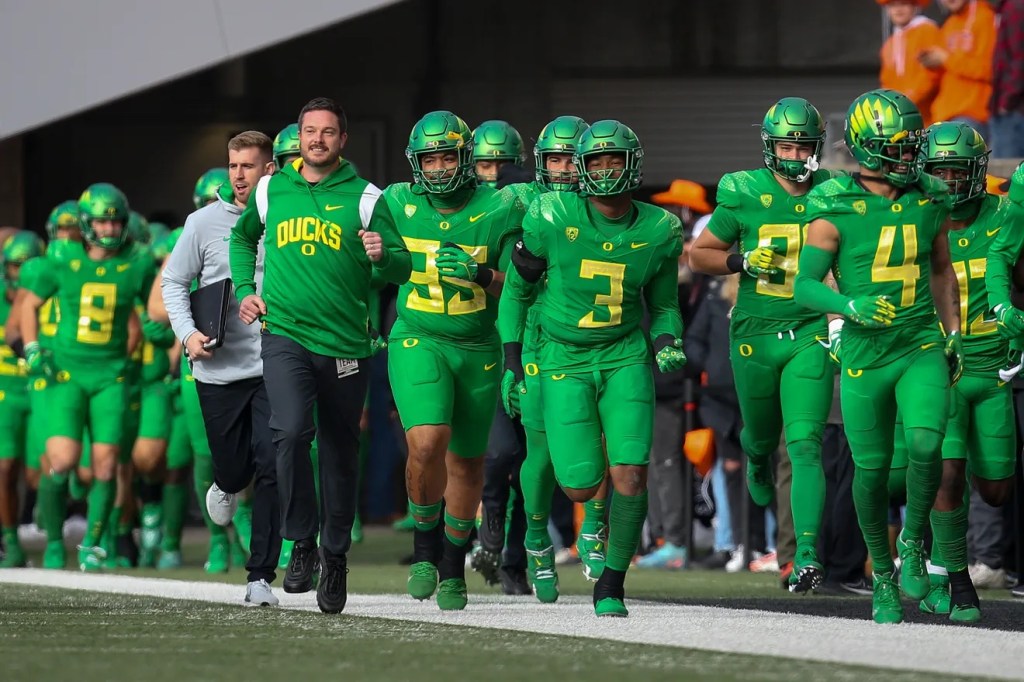
Is there a head coach in college football with a better trajectory than Dan Lanning? If there was a perfect coach to lead a program into the modern day and age of college football, Lanning just might be that guy.
He’s the perfect blend of schematic approach and a CEO-esque mentality, which can only be found when you come from the school of Nick Saban. This partnered with the Nike-funded NIL abilities in the program’s back pocket in year three of the Lanning era, and the Ducks train is full steam ahead.
Though Oregon must understand the landscape of the product known as the Big Ten and there is a world where the Ducks could find themselves as the best team in the conference in year one.
Despite losing plenty of star power to the NFL Draft, the Ducks have gone through a bit of a reload of sorts. The significance of the pieces Oregon were able to land in the transfer portal, however, continues to speak to the values in which the program Lanning is directing to build.
Replacing Bo Nix, a quarterback with the most starts in the history of the sport, while also producing an NCAA record in passing completion percentage, wasn’t going to be easy.
Yet doing so with a guy like Dillion Gabriel clearly states the importance he places on experience and decision-making at the position. Gabriel himself has played a lot of meaningful football, passing for over 3500 yards in three of his five collegiate seasons, while compiling 151 total touchdowns (125 passing) to only 26 career interceptions.
Upon his hire in 2021, Lanning stated, “The No. 1 indicator right now in college football in wins and losses is explosive plays. We’re going to be a team that’s built off explosive plays on offense, defense, and special teams. You have to be able to push the ball down the field; you have to be able to attack in the air and on the ground. That’s definitely going to be a part of our approach here.”
To see that approach on full display, all you had to do was watch last season’s Oregon offense, that passed the ball on 58% of their offensive snaps, while 25% of their passing completions went for 15+ yards.
There was also a clear ideology, as 60% of their pass attempts attacked the intermediate or deep areas of the field. So the loss of Troy Franklin, who had 50.8% of his targets alone come at the intermediate and deep areas of the field, seems significant until you factor in the arrival of former Texas A&M WR, Evan Stewart. For Stewart, he has the opportunity to burst on the scene as the college’s next big threat, as long as he’s able to stay healthy this season.
For Oregon to add Gabriel and Stewart to a group that already featured receiver Tez Johnson and two stout tackles in Josh Conerly and Ajani Cornelius, put sOregon firmly in the conversation for the best offense in the nation.
Defensively, there are some concerns, specifically the ability to generate a consistent pass rush with Brandon Dorlus now at the NFL level. The secondary, however, should be much improved. Specifically, with the addition of Washington transfer CB Jabbar Muhammad.
How Oregon makes the transition to the Big Ten will be interesting to see. On paper, they have the talent to compete with everyone in the conference. However, come November 2, when the weather is a bit more uncomfortable in Ann Arbor than what these Ducks are accustomed to, we’ll really be able to find out how well they’ve adjusted to their new environment.

Cinderella: Nebraska
Last season, this Nebraska program suffered from Murphy’s Law. Anything that could go wrong, did go wrong.
Five of the seven losses for Matt Rhule’s unit came by one score last season. They led the entire nation with 31 turnovers, and injuries told the story of a program that seemingly drug itself across the finish line.
Yet despite all that went wrong, it seems as if there’s something cooking in Lincoln, Nebraska, and it’s not just the Runza’s.
It’s what Coach Matt Rhule is building with this Cornhusker program. Starting with the fact that despite the disappointment surrounding year one of the Rhule era, this Nebraska team was able to come away with its highest win total since 2016.
And do we really have to mention the trend?
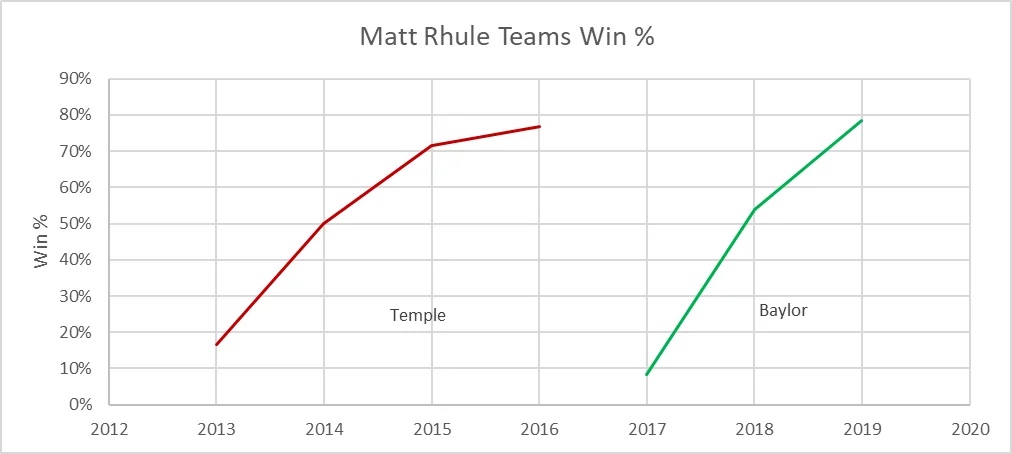
It’s well known that at his past two stops at Temple and Baylor, year two is when the ball gets rolling. And year three is where the standard was set as far as what the program could become under Rhule and the direction it was headed.
As we head into year two, this Huskers program is well on its way, making strides in the right direction.
The excitement is in the air for the arrival of five-star quarterback prospect Dylan Raiola, the program’s first five-star recruit in 19 years and the highest rated Quarterback recruit in their history, and rightfully so.
“I firmly believe that Nebraska is in my blood,” Raiola said during an interview with ESPN. “It’s a great opportunity to be part of something bigger than myself. Nebraska is a special place.”
A legacy recruit and the son of former Nebraska All-American center Dominic Raiola, it was ultimately the legacy his family left behind that made Nebraska so appealing to the upstart quarterback.
It also doesn’t hurt when your uncle (Donovan Raiola) is the current offensive line coach at the program as well. Raiola was the first domino to fall for Rhule in his mission to help Nebraska restore the prominence it once knew.
That shouldn’t be too hard, right? I mean, all the signs are there: a defense that finished in the top 15 of multiple major defensive categories, an offensive line that performed admirably, and most importantly, an offense that should be significantly improved with all the added weapons.
The acquisition of Wake Forest transfer Jamal Banks and Texas transfer Isaiah Neyor, who is coming off an ACL tear, should give the Huskers a couple of options that’ll allow Raiola to push the ball down the field in a way that has been desperately missing from this Nebraska offense.
The same could be said about the much-needed improvement to the running back room. While the return of Gabe Ervin Jr. is encouraging, there is much anticipation around the arrival of Oregon transfer Dante Dowdell.
Assuming they get the power five worst, -17 turnover differential back to a suitable number, there’s a chance Cinderella’s glass slipper may be a perfect fit in Lincoln.
“I think we have a pretty good team.” Said Coach Rhule in an interview with FoxSports, “I have a bit of a quiet confidence when I walk around about where we’re headed this year and next year definitely.”
Cover Image Credit: Getty Images

 The Philly Blitz
Leave a comment